Showing posts with label music. Show all posts

Monday, October 17, 2022

5 Things I Wish I'd Learned Sooner About Guitar Practice

1. Keep a "wins" journal

I took a guitar lesson in the pandemic. The best thing the instructor asked me to do was keep a "wins" journal. I didn't know what that was. They explained what they considered "wins":
  • When you get through an exercise at a particular tempo without making a mistake
  • When you learn a new chord or a new lick
  • When you practiced (at all) that day
  • When you like the way your guitar sounds
...and so on.

I started to realize the journal would accomplish a couple of things. For one, it would create a record of progress. I would be able to see how I was improving over time, sort of like marking your height on a doorframe as you grow up.

More importantly, it was a kind of positive reinforcement, framing guitar playing as a series of successes, progress, and wins. Rather than a battle, constant disappointment, and frustration with lack of ability. 

I also started to use the wins journal to plan upcoming practices, based on previous ones or things I want to work on.

2. Don't look at the neck

If you want to be able to play without staring at your hands, practice not looking at your hands. It sounds obvious, but I didn't realize this until fairly recently. Classical musicians learn this quickly, because they have to look at sheet music instead. 

You will be surprised how quickly you learn to trust your hands and fingers, and to instantly correct when you are wrong. It makes a huge difference in your playing and your confidence

Yes, when you are first learning something new, you might need to look down for a bit, but the sooner you get in the habit of not looking at the neck when you play, the better off you will be, and the easier it will get. 

3. Use a metronome

You think you're doing pretty good? Put a metronome or drumbeat on, loop your exercise, and see how consistent you really are. I suspect you will find you are not as fast or consistent as you think. 

Metronomes aren't scores. Higher isn't better, slower isn't worse. Metronomes are simply ways of helping you practice better. 

Start with the metronome slow enough that you can get through something (your scale or exercise) easily. When you are smooth and fluid, bump up the tempo up a little. Repeat. If you get it so fast you are struggling, back it down until you can get through your piece. 

Do not "chase" the metronome or try to keep up. The metronome is telling you where you are, not where you should be. Slow down, get smooth, then you can go a little faster. The metronome will give you some objective feedback about your progress, and it will reinforce consistency of tempo.

You can get an app for your phone, or use a drum machine (real or virtual). 


4. Spaced repetition

You aren't going to get better by practicing the same thing for 4 hours once. You will get better by doing spaced repetition. 

That means short, frequent, consistent practice sessions, rather than long, infrequent, occasional practice sessions. 20-30 minutes a day, every day, focused on particular exercises, techniques, and pieces will produce results. 

Within that 20-30 minutes, don't spend all the time on one thing. Break it up. Do 3 or 4 things for a few minutes each, then repeat a couple of times. 

This is proven to be the best way to learn just about anything. 


5. Practice is the answer for everything

Whatever the problem is with your guitar playing, the answer is almost always "practice more". 

That includes things like "I don't have any ideas for riffs or songs", "I think I need a new guitar or piece of gear", and "I don't like my guitar sound", as well as the usual problems with chords, rhythms, scales, riffs, string skipping, string bends, alternate picking, sweep picking, or playing lead. 

Just practice. Pick up your instrument, give yourself 20-30 minutes, and focus. 

Monday, January 31, 2022

Jon Appleton (1939 - 2022)


The world is a little quieter today. Jon Appleton has died. He had just celebrated his 83rd birthday on January 4.

I met Jon, or "Professor Appleton", as I knew him, when I was a student at Dartmouth College. Jon taught music, and in particular, "electro-acoustic music", which was exactly the kind of weird, technology-enhanced noise I wanted to learn more about.

Jon was patient with me, at a time when I had more ambition than skill, and more interest in making rock music or what he called "disco shit" rather than serious art music.

My first class with him was a large survey class -- Music 3. It was my favorite class that year by far. I would go on to take any and every class I could with him, including an independent study course for which I received a special commendation.

Jon thought I had potential and talent, and his statements to that effect were the kind of encouragement and validation I was starved for. I was eventually invited to be the first undergraduate to be allowed to take classes at the graduate level, as part of his brand new electro-acoustic music graduate program.

His impact on my musical education is hard to overstate. He helped expand my compositional horizons, my ear for textures, and my sense of what was allowed. He encouraged me to try new things, to experiment, to play, and to be rigorous.

One of my favorite classes found him throwing out the syllabus a few weeks in, saying "I don't think this is working, what do you all want to study?" We ended up learning about songwriting, melody and other forms of pop composition. I can still hear him singing and playing "Why Don't We Do It In The Road?" by The Beatles and analyzing how the song was put together. 

Many of Jon's other students went on to become composers and professors of music themselves, including Paul Botelho, Ted Coffey, and Michael Casey (who now heads up the Dartmouth Digital Musics program!). I would also work with another friend and former student of Jon's, Tim Schaaf, at PlayStation.

Jon was a unique individual. He had strong opinions about everything -- music, people, the world -- and he was not shy about voicing them. He stood up for what he believed in. He was also kind, warm, and had a quirky and unusual sense of humor.

Jon was extremely intelligent and creative. In addition to English, he spoke French, German, Japanese, Russian, Spanish, Swedish, and Tongan. He made weird videos that would have made him a TikTok or YouTube sensation, had those things been available back when he was creating them.

Jon was also an emotional and passionate person, married multiple times. He felt things deeply and strongly, to the point that he abandoned at least one composition I knew him to be working on because it was turning out to be too sad.

Jon mostly worked in what was called "electro-acoustic music", a serious music genre focused on timbre and construction. Jon's earliest pieces were musique concréte, when tape machines and oscillators were the only way to compose, and then adopted the then-new analog subtractive synthesizer and early computer tools for music composition. 

Dissatisfied with their limitations, he helped create the Synclavier -- the world's first digital synthesizer, and helped make sure it would be able to go beyond "disco shit" and do micro- and macrotunings, sample, record, and edit, sequence at high resolution, and have multiple synthesis methods. 

These are all things we take for granted today, but they were unheard of on any instrument in the late 70s and early 80s when he and the rest of what became New England Digital began to work on it. It is a sign of progress that this device, which cost $500,000 in 80s dollars can now be purchased in an emulated version for your computer or phone for a few bucks.

And it was used for some pop music, by Michael Jackson (the intro to "Beat It" and a bunch of Thriller), Sting (Nothing Like The Sun and other albums), Trevor Horn, Laurie Anderson, Duran Duran, and countless other artists you and I love. Frank Zappa was a big Synclavier fan and perhaps the best example of an artist bridging popular and serious with it.

Appleton himself was fast and creative on the Synclavier, and used it to compose a number of beautiful and interesting pieces. In his later years, Jon returned to writing traditional tonal music for piano, choir, and strings. 

Jon was an inspiration to me and countless others. I created and taught my own 20th century music class inspired by what I learned from him and how it changed me. I continue to teach songwriting and compose in no small measure because of him. I use the things he taught me every day.

I am grateful to have been his student, and later, his friend. I saw him all too briefly back at Dartmouth to celebrate his retirement back in 2009, and a few times here in San Francisco as he was passing through. 

Thank you for the music and the wisdom, Jon.

---

You can find some of Jon's work on various streaming services, music stores, and YouTube.

Here is one of Jon Appleton's pieces for Synclavier:


A short documentary about Jon from 2011:


This interview with him from 2020 highlights his sense of humor and his personality:

Tuesday, December 08, 2020

Harold Budd (1936 - 2020)

Harold Budd has died. He was 84 years old.

Mr. Budd was my favorite composer and musician, and made my favorite record. Since discovering his music, I have listened to his work more than any other musician, hearing something by him almost every day.

His music is beautiful and peaceful. It can appear more simple than it actually is, however. Budd was a serious composer, and many of his pieces use compositional techniques not often seen in modern "ambient" music, like mirror canons.

Budd's work is also distinguished by its carefully calibrated emotional sensibility. It isn't cloying or saccharine, the way much new age or ambient can be. Nor does it induce a sense of impending doom or pure minor-key sadness the way "dark ambient" attempts. For me, his work always had the right balance of tranquility and focus, of melancholy and remembrance. 

I have written about his music before, and nearly every album he released ended up in my top picks for that year. While he is somewhat unknown outside of ambient or other specific music circles, you may have heard his music in the recent HBO mini-series I Know This Much Is True, or in movies including "Mysterious Skin" and "White Bird In A Blizzard", collaborating with Robin Guthrie, with whom he had just released a new album last week, on December 4, 2020: Another Flower.

If you have not heard his work, fire up your music subscription service of choice and check out "The Pearl" or "Jane 12-21". 

Budd worked with a number of great musicians including Andy Partridge of XTC, John Foxx of Ultravox, the aforementioned Robin Guthrie (and Cocteau Twins, on "The Moon and The Melodies"), and famously, Brian Eno.

I was fortunate enough to catch Harold Budd in a wonderful live performance in 2018. The concert was magical, dreamlike, and perfect. It was a special moment in an otherwise terrifying and trying year. In a beautiful auditorium inside the Toledo Museum of Art, I and a few dozen (at most!) other fans heard one of his earliest pieces and some of his most recent. At that moment, I felt I could die a happy man. 

Nobody lives forever, and at 84, Harold Budd had a long life and a productive career. Still, I mourn his loss. He was continuing to work and compose his memorable and unique music, and there was every indication he would keep going. He was a guide for how to age gracefully while continuing to compose and work.

2020 is terrible. Thank you for all the music, Mr. Budd.


Tuesday, October 06, 2020

Edward Van Halen (1955 - 2020)

Eddie Van Halen died today from throat cancer. He was 65 years old.

Ed, The Musician

Eddie Van Halen and his brother founded the band that shared their last name in 1972. Eddie made his name and his fortune writing songs and playing guitar in that band, whose self-titled first album was released in 1978.

Ed was a guitar hero, and still frequently tops lists of "best" and "most influential" players. He is credited with inventing two-handed tapping, a visually flashy technique where players tap the strings on the guitar's neck with both hands. It is itself a logical extension of the "hammer-on" and "pull-off" techniques, but Ed did it first, producing blazing runs of 16th notes and inspiring generations of teenaged players. 

His playing had a style, which, while squarely in the "hard rock" camp, was broad and unique. Ed seldom just hit a basic chord and let it ring. He wrote interesting guitar parts that covered a space between chords and single notes.

Eddie Van Halen's playing also had great feel. Despite his considerable chops, Ed's playing always felt loose, fluid, and effortless. Like a true master, he makes it look easy.

Ed also cared a lot about guitar sound and guitar technology. He famously discovered that by starving his tube amps of current using a "variac", he could get the sound he wanted from his amp. He developed his own "brown sound", a unique, distorted guitar tone that retains dynamics and detail. He also had a shimmering clean tone, all enhanced by bits of "jape" -- his term for his effects, a tape delay, phasing, flanging, and chorusing, deployed as he liked.

He built his own guitars from parts, with a deliberately raw and primitive aesthetic, offset with his bold home-created striped paint jobs. He was constantly tinkering with different ideas.

He was also a solid piano player. Many of his songs were written on keyboard first, and a number of Van Halen's biggest hits were driven by keyboard, rather than guitar -- notably "The Cradle Will Rock", "Jump", and "Why Can't This Be Love"

Ed was more than a riff generator, he was a songwriter. Yes, he created those intricate and interesting guitar parts, but he often wrote the vocal melodies and harmonies, too.

He also famously contributed the guitar solo to Michael Jackson's "Beat It"...the subsequent success of "Thriller" kept Van Halen's own album 1984 from the #1 slot, and Eddie's brother Alex never let him forget it. 

Ed also played rhythm guitar on Thomas Dolby's Astronauts & Heretics album, on the tracks "Eastern Bloc" and "Close But No Cigar".

Ultimately, his music brought happiness to millions of people, and his playing has inspired guitar players for over 40 years. Few people have ever had that kind of impact, and it is difficult to imagine anyone else having that kind of impact in the future.

He Gave Me A Guitar

I met Ed in the late 1990s. I was working for an audio technology company, managing their professional products. I was working from the Mountain View office when the receptionist told me there was an "Edward Van Halen" on the phone to talk to me.

I looked around the office and said "very funny, guys...sure, put 'Mr. Van Halen' through." Once I heard the voice on the other end of the phone, I instantly knew it was actually him. He wanted to try out some of our products in his 5150 studio at his compound in the canyons between Los Angeles and the San Fernando Valley.

A few days later, I dropped the gear off and was quickly hurried off the premises by the chief engineer. But about a month later, when I returned to pick up the demo unit and drop off the units he purchased, Ed came rolling up in a golf cart, wearing cow-print pajamas. It was close to noon, and he looked like he had just gotten out of bed.

He introduced himself ("Hi there, I'm Ed!") and we talked for a few minutes. He said he thought I was going to be older. He asked me if I played guitar. I told him I did. He smiled big, and walked over to his garage. 

As he pulled the hinged door open, he said "I wanna give you a guitar and an amp!" I was stunned. He said "I am really proud of this guitar, it's my favorite one I've worked on." He pulled out a plastic case, set it down on the driveway pavement, and opened it up. I was looking at a Peavey EVH Wolfgang, with a sunburst top. He said "It's yours, man...lemme get you a stack, too".

He started pulling out a complete 5150 amp stack: a tube head and 2 4x12 cabinets. 

I told him "I never in a million years would have believed I'd be standing in your driveway while you hand me a guitar." He just smiled that goofy smile of his and said "the amp doesn't sound good unless you turn everything up to the max." I assured him I would.

I couldn't even fit it all in my car, and left the 2nd amplifier cabinet at his place. I drove home in silent shock. "Eddie Van Halen just gave me a guitar." I never did go back for the bottom cabinet.

Of course, when the team at work found out about it, they were incredibly jealous.

I still have the guitar. I didn't have him sign it, as I thought that would have just been tacky. Though it is both valuable and desirable, I will never sell it.  It's not a collector's item, I play it. It has a few dings and scratches. It is one of the nicest-playing guitars I have, with a comfortable (for me) short(er)-scale neck. 

It has a "D-Tuna" that lets you instantly change to a drop-D tuning, along with an Ed-approved Floyd Rose vibrato system. The dual humbucker pickups and overall sound of the guitar mean it serves as my "hard rock" guitar. The EVH fills the space in my collection that a Les Paul might normally occupy for other guitar players.

Thank you for the music and the guitar, Ed.

***

Some examples of his work follow.

"Eruption", perhaps his best known display of his technique:


"Hear About It Later", one of my favorites, showing off his musicality and playing range:


And of course, "Jump" -- Van Halen's biggest hit, which mostly features the guitar hero playing a synthesizer:

Thursday, September 10, 2020

Albums of Influence: Zero Summer Game (1990) by Anu

As I write this, it is the summer of 2020 -- the summer of the virus. It has been a negative space. Nothing. A zero. A time I have tried to fill with creativity and distraction. It has reminded me of another summer, 30 years in the past, the “zero summer” of 1990. 
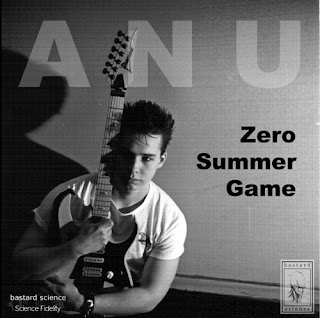
Album cover for MP3.com re-issue of "Zero Summer Game", 2000
Album cover from the MP3.com re-issue.
Photo by Amanda Erlanson

If we are defining “albums of influence” as records which changed my life, or how I thought about music, or meant something to me, or were memorable, or all of the above, then one album stands above all others in my life. My first solo album, written and recorded in the summer of 1990: "Zero Summer Game".

The summer of 1990 was special for me. In retrospect, it was one of the happiest times in my life.

In early June, I was home from college, between my junior and senior years. My parents were away for most of the season, traveling. My brother was at Outward Bound. I was in the house, alone. 

The house was beautiful and spacious, set below and back from the private drive by a long and steep driveway. The backyard backed up to park land. The street fed into a small suburban neighborhood of mostly unpretentious homes.

What had been my bedroom was now my brother’s. What had been his room was now the “guest room”, redecorated, and that would be where I resided. It felt like a hotel suite, even after I had set up my stereo and unpacked my few bags. What little of my things remained were unceremoniously piled in the closet. I was now a guest in what had been my home.

The weather was typical for Northern Virginia summer: aggressively hot and humid. The skies would darken periodically, but the rain largely refused to provide relief.

After a few days of sleeping off my college fatigue and nights watching rented VHS tapes, one day I went to the basement library of the house. One wall was mostly windows, looking out onto the woods. It was a big room, mostly empty but for bookshelves, a table, and a place to sit and read -- and I set up my recording gear:

One night, after dinner, I went downstairs, flipped on the TV, and started noodling around on my guitar. Inspired by a music video, I started writing on a song of my own. I stayed up for hours working on it, programming drums, making a bass part, writing two guitar parts, lyrics, and lead and background vocals. Home alone, I felt uninhibited about singing loud and trying new things with my voice. I even put in a guitar solo. I went to bed around 3 am.

The next day, I rolled out of bed and hit play on the cassette deck in my room to listen to what I had done the night before. It was...good. I had written and recorded a good song. I wondered if I could do it again.

And so the “zero summer” of 1990 began.

Days, I would get up around 10 or 11. I didn’t drink coffee in those days. I’d let the dog out, and have water or juice. I’d microwave something -- oatmeal, eggs, a sausage biscuit. I would glance at the newspaper.

At some point, I’d exercise. Maybe I’d go to the gym, pushing myself hard in the way that only young adults can, hiding from the heat in the air-conditioned fitness complex. Or I’d go for long runs in the swampy heat of the DC/NoVa summer, threading through the suburban side streets between my house and the high school I had attended. Over rolling hills, past churches, down sidewalk-less black streets. I had a plastic digital watch that would beep and provide a pace.

I would drive to the video store and swap watched VHS tapes for new ones. The car’s steering wheel would be almost too hot to grab. I would blast the AC with the sunroof cracked, music playing as I drove through the McLean streets.

My friends would call. Let’s hang out. Or go on a date. I had a few young women I saw sporadically. I went to the movies a staggering 35 times. But I remember that I really just wanted to stay home, writing and recording songs. I didn’t drink alcohol in those days either, so I had plenty of energy and focus.

Each night I went downstairs to my makeshift studio space, I would finish a whole song. I quickly decided this record would have a theme or a concept, and that concept would be the very summer I was living. I wrote about myself as a character, and lived my life as the character I was writing about. I thought of a Laurie Anderson quote: “This is the time, and this is the record of the time”. Those ideas began to inform the record, and once I had a few songs done, it helped guide me to finish the rest. 

I had written songs before, but the summer of 1990 saw me taking things to a new level. Melodies became more intricate. Chord progressions evolved. There were bridges. I even put guitar solos on many tracks, as I had learned the unified neck and wanted to push myself. 

I spent nearly the entire month of July living in Tokyo. I had planned to spend the summer in Taiwan teaching English, all arranged by my friend Andrew. But days before our planned departure, all the plans came apart. My parents, anxious to have me gone (and perhaps for me to have some kind of adventure) insisted I had to go somewhere. Some frantic phone calls later, and I was on a plane to Tokyo, with one suitcase, a guitar, and about $500.

The full story of my Tokyo adventures is best left for some other time. I did take a cassette of my rough mixes with me, which I promptly lost at a nightclub dancing with some girls I met. Most days I spent some time writing songs and practicing guitar.

I returned to the USA and again, the house was mine alone. I returned to my work plan. I went to the movies. Once or twice I went into DC to hang with my friends there. Had a few memorable nights at Poseurs, my favorite dance club (where, underage, my admittance was never guaranteed). One special night in Georgetown where a woman asked me to dance.

All of those feelings and experiences went into the record. There were songs about people I knew, coded and secret. There were songs where I got weird, adding strange sounds or switching time signatures. I tried different types of guitar orchestration. One song was an e-bow orchestra. Others used no chords. On the title track, I played a spiral pattern on the neck, and thrilled at how perfectly it fit, as did using a 3-bar phrase instead of a typical 4-bar phrase for some sections.

Listening to the record today, it is rather amateurish. The mixing is terrible. The vocals are wobbly. The guitar playing is rudimentary. But the record still has a unity and consistency. It sounds like an album, not just a bunch of songs. It tells a story, and it is very much the story of that summer. 

It was a true DIY project -- I wrote, played, mixed, and recorded every note. Every song was a “real song” -- fully developed, with melodies, chords, lyrics, and ideas. Each was part of a larger whole. Sequenced carefully, varying in tempo and feel. 

As noted in the 2000 MP3.com reissue, these songs "haven't held up all that well over the years, but they do mark an important step in my development as a songwriter. At the time, I was very proud of this work." Even if nobody else listened to it, liked it, or understood why I made it, or what it meant to me. I knew I could make records myself, and I knew that I absolutely loved doing it. 

I am much better at music now -- better at writing songs, recording, playing guitar, singing. But no matter how good I get, and how satisfied I am with my work, none of it will compare to how accomplished, successful, and excited I felt at the end of the zero summer of 1990.

I think about that summer often. I realize that in many ways, I have tried to re-create pieces of that total experience at various points in my life. 2020, the summer of the virus, is one example. One could look at my upcoming “Paper Life” record as a kind of answer to “Zero Summer Game”, though it was not directly intended as such.

Not long ago, I dreamed I was back there, running through the neighborhood at night. I can feel the hot, sticky, evening air evaporate as I slide open the glass door at the back of the house and walk into the air conditioning. 

A few times, I have driven back through those streets, wondering at how far I have come. I roll through the old neighborhood, peering down the hill at the house I lived in for a brief time. 

Paste-up used for inside cover of original cassette release
Remains of the original paste-up used for the inside cover of the original cassette release of "Zero Summer Game", taken not long after I finished the project. Polaroid(!) photograph by Joseph Kirk.


Tuesday, May 12, 2020

Albums of Influence: "Second Toughest In The Infants" by Underworld

Los Angeles, 1996.

It is a hot day. May, probably. You are on the freeway. 101 southbound. Driving from your small house in the Sherman Oaks suburbs to Hollywood.

You are listening to KROQ, as you often do. You have to stay up on what's popular, what the kids are into, what's selling. Plenty of what's on these days leaves you cold -- stock pop-punk, barely-OK pop, metal. 

It's maybe 2 pm. A new song comes on. A synthesizer chord stretches on forever. A stuttering vocal sample bounces on top. You hear an insistent drum loop, the rhythm skipping as it's retriggered. The synthesizer bass is all rapid-fire 16th notes with a slow flanger. You think it sounds like helicopters, the ones passing overhead at night.

The vocals recite stream-of-consciousness lyrics, distorted and echoing:

rioja rioja reverend al green deep blue morocco the water on stone the water on concrete the water on sand the water on fire smoke the wind the salt the bride boat coming dave in the water old man einstein on top of his house... 

It's arresting. It's strange, it's not some typical verse/chorus la-la-la bullshit. You pull over onto the freeway shoulder and wait for the over 9 minutes of the track to end. The DJ says something about "Underworld" and "Pearl's Girl". You pull back onto the freeway and head for the record store. You buy a CD.

Your bands have come apart. Your marriage is coming apart. Your life is coming apart. You are going to quit your job. You are going to quit everything. 

The song feels and sounds like the fugue state in your head. The blue-and-gray album cover looks like your life feels - some kind of modern, abstract smear. Maybe designed, maybe random. 

The record is a revelation, full of contemporary sounds and long, abstract songs.

Your sun
Fly high
Your window shattering
Your rails
You're thin
Your thin paper wings

You hear on the news that people have been shooting out windshields on the freeway. On your way to work, at the job you'll be quitting soon, a baseball-sized piece of concrete seems to appear out of nowhere and knocks a golf-ball-sized divot into your windscreen. At 65 miles per hour, in the morning rush. You manage not to kill anyone as you brake and swerve.

You think of the vocoded chants, the incessant grooves. The way the chords feel like breezes in the San Fernando valley's heat. You can't always make out the words, but you can always make out the feelings.

white room sun room shadow room night transmitting cars across the room these things sent to dance across the room eye watching from your bed returning to you

You listen to this record in your car. Your wife doesn't like it, but then, she doesn't like anything about you these days. You listen to it as you walk through the neighborhood at night, after she's gone for good.

You spend a lot of time running laps around Balboa Park. Thinking about everything. Trying not to think about anything. Words and deeds. Bad songs and failed bands. Your ideas and lack thereof. You wonder what you are going to do. Tonight. Tomorrow. Next year. With the rest of your life. Do you even have a rest of your life now?

You look up in the evening sky and see the Hale-Bopp comet, blazing, the size of your thumb. They say it only comes around every 2,500 years. Cultists are killing themselves over it, and you can understand why.

It is miraculous, mysterious, ominous, beautiful. A reminder there are more things in Heaven and Earth than dreamed of in our philosophy. A once-in-a-lifetime experience, inescapable.


Your feet hammer the path. You glance up again. Despite everything, the ruins and the chaos, you know you are lucky. Lucky to be here. To see this marvel, day after day.

The album closes with a brief guitar instrumental, a palate cleanser before the echoing "Stagger".

cover your teeth
i love you
don't bite me yet
i believe in you
i found you shopping in europa
on wardour street
not phoning packwidth
guilty as sin
straighten

Everything is falling apart. The future is uncertain. The world is full of wonder.

Ain't it good to be alive?

and old man einstein crazy in his attic crazycrazycrazycrazycrazy crazycrazycrazycrazycrazy crazycrazycrazycrazycrazy crazycrazycrazycrazycrazy crazycrazycrazycrazycrazy crazycrazycrazycrazycrazy crazycrazycrazycrazycrazy crazycrazycrazycrazycrazy crazycrazycrazycrazycrazy crazycrazycrazycrazy

***

"Second Toughest In The Infants" isn't Underworld's best album -- that would be "dubnobasswithmyheadman", their debut. But "Second Toughest..." is my favorite Underworld album, because it introduced me to the band, and their arty take on electronica. It reminded me that weird can sometimes be commercially successful, or at least get airplay. It showed me how the most banal and boring of genres can provide a grounding for adventurous and bold work.

Some albums are important because they are so indelibly fused to a time and place, to memories of the past and memories of future dreams.

Whenever I hear "Second Toughest...", I am right back there on the path around Balboa Park, staring at the comet in the sky as I try to outrun my life. I am in my car, driving somewhere in the Los Angeles heat. I am still young, confused, and alive.

***


Wednesday, May 06, 2020

Albums of Influence: "Computer World" by Kraftwerk

Florian Schneider of Kraftwerk died today, after a short battle with cancer. He was 73 years old.

Florian Schneider
Schneider was a co-founder of Kraftwerk, which started in 1970, not long after I was born. Schneider and the early version of Kraftwerk were part of a famously creative nexus of musicians in Germany known as "krautrock" or kosmiche musik that would spawn bands like Neu!, Harmonia, Cluster, Can, and Faust, as well as more synth-driven groups like Tangerine Dream, and eventually, what we think of as mature Kraftwerk. You may not be too familiar with them, but your favorite bands are.

Kraftwerk has been called "The Beatles of electronic music", which is apt. Their influence is profound, and any electronic musician, even if they've never heard or heard of Kraftwerk, is following in their footsteps. And in the same way, from our current vantage point, it can be difficult to see what all the fuss was about.

I first remember hearing Kraftwerk on the radio not long after "The Man-Machine" came out in 1978. It stopped me in my tracks. I only heard perhaps the last third of "The Robots", but I was immediately transfixed. It was like the spacey sounds of Tomita and Jean-Michel Jarre but wrapped up in a catchy pop song, with dark overtones and what sounded like Cylons singing.

As was often the case with pre-internet music discovery, the radio didn't tell me who the artist was or the song. I had no idea, but I never forgot that sound, and assumed I'd never hear it again.

Years later, I was in a record store. The punk girl behind the register put on a record, and I went up and asked her "who and what IS this?". She smiled and said "It's Kraftwerk. 'Computer World'." It had just come out. As soon as I had saved up enough allowance, I bought it. On vinyl.

"Computer World" front cover
Kraftwerk's "Computer World" was released in 1981. Computers, particularly home computers, were still rare and magical things. The world was still blurry analog. Society was just beginning to understand how computers would be permeating all aspects of our world. Even music prominently featuring synthesizers was still a novelty, and considered something between lame and outright cheating.

The album was one of the first that registered for me as a complete artistic experience, with every aspect considered.

Take the cover, for example. It's an eye-searing yellow-green, the color of early CRT computer displays. Against that field is a black-and-white photo of a computer, and on the computer screen, the image of the band, done in period-accurate graphics with what passed for computer typography in those days (and for my younger readers, seriously, computers looked like this, both the hardware and the screen, and we still thought it was mind-blowingly futuristic and cool). This was powerful iconography, and also had the advantage of making the album stand out in record stores.

The back of the album featured the band...or was it mannequins?...posed in front of computery-looking machinery, shaded green and black, with computer text across the bottom (including being in all upper case).

"Computer World" back cover
The band isn't getting the spotlight -- the computer is. And it is worth noting that, if anything, the band is somehow reduced by the computer on the cover.

Drop the needle on side one. A robotic but funky groove (Kraftwerk's specialty!) starts off, with catchy percolating synthesizers, before a tranquil string pad wafts over the top. You immediately notice (particularly in 1981!) what's missing, what you're not hearing: No drums. No guitar. No electric bass. This is all synthesized. But it is full and engaging.

Over the groove, the singer chants clipped and minimal phrases: "Interpol and Deutsche Bank. FBI and Scotland Yard." He is answered by what sounds like a Speak N' Spell: "Business. Numbers. Money. People." Or "Time. Travel. Communication. Entertainment." Each line repeated twice, before the vocoded chorus simply notes "Computer world." You can almost hear the period at the end. Not an exclamation, or a lament, or a joke. A fact. Computer world.

Side one then moves to the album's "hit singles", "Pocket Calculator", which features tones that sound like they're from a Merlin game, and somewhat cute lyrics that are again as merely descriptive as they can be -- "I am adding and subtracting. I am controlling and composing. By pressing down a special key, it plays a little melody". Seems harmless enough.

The other single on the album was "Numbers", a typically Kraftwerk-y beat with typically Kraftwerk-y lyrics -- in this case, just recitations of numbers from different languages, rendered with a variety of techniques ranging from purely synthetic to vocoded to spoken and sung. There's hardly any "music" to it, no bass riff, no chords, just an odd, echoey synthesizer sequence bending and bouncing, and that's only present for about 1 of the song's nearly 3.5 minutes. The rest is voices and drums, minimal and primal. How could they leave so much out?

This segues into a reprise of "Computer World", with the counting returning before it all fades out in a blur of robots reciting numbers.

Side two kicks off with perhaps the most beautiful song in Kraftwerk's catalog, "Computer Love". It has beautiful and simple synthesizer melodies rendered in twinkling tones or silky strings. It is remarkably expressive for all its restraint, and Ralf Hütter's wobbly singing.

It is hard not to hear this now (and perhaps, RIGHT NOW) and not feel how prescient it is:

Another lonely night
Stare at the TV screen
I don't know what to do
I need a rendez-vous

Computer love.

At the time, the idea of computer dating seemed weird and futuristic. From the vantage point of 2020, it is hard to imagine a time when people didn't find dates through the internet, through computers.

The music manages to convey both the sense of loneliness and a sense of beauty. Observing, not judging. And it stretches out, for a glorious 7 minutes and 20 seconds, floating, gliding.

This is followed by "Home Computer", which has a much more sinister groove, and lyrics that simply state "I program my home computer, beam myself into the future." That's it. They're sung by a human who sounds focused but disinterested, as the track's groove splinters into percussion and bubbling computer noise.

The album closes with the starker and darker "It's More Fun To Compute". No human sings on this track -- the album closes with a robotic voice intoning the title over a bass drone and an alarm. The silky synths and percolating grooves of "Computer World" return, but somehow feel desolate and disconnected. Computer world.

The total effect was potent at my young age. This wasn't just a bunch of cool songs, this was an album, with an arc and purpose from song to song, and arranged in a specific way. But it was also cool, catchy, easy to enjoy, different from what was on the radio, and not just modern, but futuristic.

Also, only 7 songs and 35 minutes. They said what they needed to. No filler. No pandering.

***

This was Kraftwerk's last great album. It would be a long time before they would put anything else out, and aside from the odd single, they haven't done anything truly new since, mostly re-hashing or re-mixing their old work.

I would go back and discover all their great records -- the arguably even-better "The Man-Machine" (which had the song I'd first heard those years back - "The Robots"), the sublime and influential "Trans Europe Express", the primitive "Radio-Activity", and their foundational "Autobahn". I'd even track down their earlier work, which feels much less vital but is still interesting and creative.

Those records were all great, but were just furthering the impressions and understanding of things I had gleaned from living in "Computer World": Make total statements. Consider all aspects of your album. Be creative. Be restrained. Don't be afraid of technology.

Thank you for the music, Florian. And thank you for the music, Kraftwerk.

Thursday, April 16, 2020

Albums of Influence: The Shadow featuring Orson Welles on Murray Hill Records

"The weed of crime bears bitter fruit! Crime does not pay. The Shadow knows!"

In 1976, Murray Hill records released a series of three-album boxed sets documenting classic radio programs. My Dad brought two home for me. "The Green Hornet" and "The Shadow", which was voiced by Orson Welles.

It was my first record.

I was quite young, and this was before VCRs, cable TV, video games, and the internet. I loved records. The technology itself was magical. And "The Shadow" let me experience movies for my mind, and I could play them any time I wanted.

The original recordings were relatively low fidelity, but fine for playback on a kid's record player. I must have played those 3 discs -- 1 episode per side -- a hundred times.

The original shows were broadcast in 1938. Back then, The Shadow was the equivalent of today's Marvel superheroes, and had been adapted from pulp books to several radio reboots. Orson Welles was 22 when he voiced Lamont Cranston, before moving on to bigger and better things. These recordings include the original in-broadcast commercials, which are historical artifacts in and of themselves. As are the voices, accents, and dialogue, capturing an America that now only lives in black-and-white movies and scratchy recordings.

It didn't seem too corny to me. Even back then, I could appreciate the patina of history on these short, simple radio dramas. 

If nothing else, "The Shadow" taught me how entertaining and fascinating records and recording technology can be. It also taught me that records can tell a story, and should be worthy of being replayed. If my records have concepts, themes, and sound effects, well, perhaps this is why.

I still have these records, which are the only things that remain from my childhood.


***

[This concludes the 2020 "Albums of Influence" series. Thanks to Adam Tober and Paul Zyla for asking me, and thank you all for reading.]


Albums of Influence: Security (a.k.a. "Peter Gabriel 4") by Peter Gabriel

Released on September 6, 1982, Peter Gabriel's 4th solo album was the peak of his creative career. He, somewhat perversely, wanted to call the album "Peter Gabriel" -- just like his last 3 records. Geffen Records, his American label, insisted the album have a proper and unique title, at least for the USA, for obvious reasons. Gabriel reluctantly agreed, and chose the title "Security". It was placed, via sticker, on top of the shrinkwrap of the LPs and cassettes (Dear reader, the compact disc had not yet been invented).

I was aware of Peter Gabriel primarly through his previous hit single, "Games Without Frontiers", from "Peter Gabriel 3" (a.k.a. "Melting Face"). I heard it on FM radio and found it oddly compelling. The oily, fluid bass guitar, the clanky drum machine against the tribal drums, the whistling hook, and the surrealistc lyrics all made an impression. 

When I heard his new single, "Shock The Monkey", and saw the video, I resolved to get the album. I was only able to find it on cassette (the worst audio format ever), but bought it all the same. 

"Security" was a continuation and refinement of what Gabriel had been working on since he left Genesis to be a solo artist.

The cover art, for example, is just like his previous 3 records: a dramatically distorted photo of his face, both mocking and hewing to the conventions of pop music stardom.

And that really is his face. It is a still grabbed from a video shot and directed by Malcolm Poynter, who says “...my memory of this project, which was crucially pre-Photoshop, was us dragging around flexi mirrors and Fresnel lenses, and...having a very creative (if chaotic) time."

One can only imagine how Geffen records must have felt: That cover image, the title being the same as his last *3* records, and a "hit single" about animal experimentation.

The album starts with "The Rhythm of the Heat", which fades in what sounds like bamboo pipes, before Gabriel's alien wailing drops into dramatic and dynamic drums. The piece is, in some ways, very "Genesis-y" -- it's got a bit of music theater vibe about it, but is also creepy and unsettling. It's like a song version of the Wicker Man, all strange rituals on the edge of violence. 

Listening to his voice whisper "Smash the radio...no outside voices here! Smash the camera...you cannot steal away the spirits! Smash the watch...you cannot tear the day to shreds!" before he starts screaming about how "The rhythm has my soul!" and drums and chanting bring the song to a crescendo and climax was...potent. Like musical theater, it might be a little cheesy, but that doesn't mean it's not affecting, if you are in the right mood and open to the experience.

The second song on the album is "San Jacinto", a similarly elaborate composition that details a coming-of-age ritual and measures it against modern life ("each house a pool, kids wearing water-wings, drinking cool...past Geronimo's disco...").

Gabriel is interested in studying culture as an abstract. Everything is ritual, power structures, lore. He's long explored the idea that "modern" culture and "primitive" culture are basically the same. That nothing really changes, that one is not better than the other, and that perhaps we shouldn't be so proud of ourselves. That there are forces beyond our comprehension, or at least more in Heaven and Earth than is dreamt of in our philosophy."

"I Have the Touch" and "The Family and the Fishing Net", for example, are basically an alien or outsider observing business and a wedding and documenting what they see. The commonplace becomes exotic through distance and perspective.

"Shock The Monkey" kicks off side two. This was the album's single, and was about scientific experimentation on a monkey...from the monkey's point of view. Gabriel shot a pretty great video for it, where he manages to obliquely address the song's lyrics and get at his obsessions and album themes. It's a pretty solid pop song, and one of the more conventional productions on the record -- there's a steady beat throughout the song, you could probably dance to it, and it has hooks.

Similarly, "Wallflower" is a beautiful ballad, with Gabriel's lovely voice and chiming Yamaha concert piano (the same kind U2 used in the early days -- it's a very distinctive sound). If you can look past it being about tortured political prisoners, it almost sounds romantic.

The album was one of the first completely digital recordings, and also extensively featured the then state-of-the-art Fairlight CMI (computer musical instrument), which allowed for sampling. Back in those days, people used it to make instruments, rather than rip loops off of records, and songs like "Lay Your Hands On Me" (about Jesus as a suburbanite) have all kinds of clanking cans, eerie blown bottles and pipes, and other "found sounds" that are melded into the track. 

Gabriel famously told the drummers not to "use any metal" on the album -- no crash cymbals, no hi hat. Just drums. This helps give the album a tribal vibe, and forces the drummers to play different kinds of beats. Some of the songs have artificial hi-hats and crashes, but Gabriel's rules and aesthetic help give the album a distinctive sound.

Gabriel has a deserved reputation for spending excessive time in the studio tweaking the minutia of his recorded work. Whereas this makes records like "Us" sound overcooked and flat, his attention (perhaps tempered by finite budget and cruder tools) made "Security" exciting, at least for its time.

After "Security", Gabriel decided to play it straight. His next album, "So", was a kind of commercial sell-out capstone to his previous four arty-but-unsuccessful records. "So" had a simple and memorable title, displayed prominently. The cover featured a beautiful black and white photograph of Gabriel's handsome, unobscured face by Trevor Key, and was designed by Peter Saville (see also: New Order). 

"So" featured songs that were shiny, simplified pop takes on his multi-cultural world music sound, with nearly all of the weird and dark stuff stripped away, or confined to one song: the album-closing "Milgram's 37", the chorus of which features people sing-chanting "We do what we're told to do". Perhaps it is Gabriel's sly commentary on capitulating to pop machinery.

Yes, "In Your Eyes" is nice, but it's pretty much "Wallflower" part 2, with the strange blood subtracted and replaced with treacle. "Don't Give Up" has a beautiful vocal from Kate Bush...but that's about it. The singles are lame, and are basically Gabriel singing about his dick, supported by gimmicky videos. This, from the guy that had done "Biko" just a few years prior.

Naturally, "So" was a smash hit -- the biggest of his career -- and marked the end of his truly interesting and challenging work. It sold 5 million copies in the USA alone. Finally, Geffen Records was happy.

Gabriel's soundtrack to Scorsese's "The Last Temptation of Christ" is also fantastic, but has no songs or vocals, and is largely about timbre and vibe. His subsequent solo albums were attempts at recapturing either the success and sounds of "So", or "Security", or trying to fuse them together. 

"Us", "Up", and the rest are totally fine. Gabriel has a great voice, writes good or great melodies, hires top-notch players, and meticulously crafts his records. But a certain fire, or perhaps perversity, seems lacking post-Security.

For me, all of that has only emphasized how great "Security" is.

Aside from lessons observed from Gabriel's career, "Security" showed me how you can make strange things into pop songs, and how the fire of personal obsessions can drive you to interesting places. 

And perhaps, how selling out can make you rich at the expense of your weird little soul.

***

"Shock The Monkey"

Wednesday, April 15, 2020

Albums of Influence: Spirit of Eden by Talk Talk

Some records define their own genres. So it is with Talk Talk's apex, "Spirit of Eden".

Mark Hollis, already a veteran musician by his late teens, formed Talk Talk in the UK in 1981. The band was quickly picked up for various deals before ending up with a recording contract with EMI. EMI had just broken through with Duran Duran, and with Talk Talk, saw similar prospects for new wave gold.

Talk Talk's first album was straight-up new romantic / new wave pop. It was produced by Colin Thurston, notable not only for engineering Bowie's "Heroes", but for having just produced the fantastic debut album of Duran Duran. 

One can hear a sonic connection between that first Duran Duran record and Talk Talk's first album, "The Party's Over" (1982). Both records are full of Simmons electronic drums, chorused bass guitar (fretless on Talk Talk's record!), and plenty of keyboards, the albums give plenty of room for their distinctive vocalists to shine, and the production highlights the strengths of the songwriting. Talk Talk would even support Duran Duran on tour in 1982.

And Talk Talk's pop songs were quite good. While the band didn't particularly like that first record, I love it. I saw the video for the song "Talk Talk" on Rock N America, a small, late-night syndicated video show, and was immediately interested. I ended up buying a vinyl copy of the album and devoured the songs. I taught myself fretless bass by learning to play all the bass parts on that record.

Talk Talk's next two albums ("It's My Life", 1984 and "The Colour of Spring", 1986) were increasingly elaborate productions. Still very much pop / new wave, the sonic palette broadened on each record. They continued to write great songs, albeit with less consistency and less pop rigor. At the time, I found the lack of wall-to-wall pop songs disappointing.

But "The Colour of Spring" held my attention in other ways. In particular, there was "April 5th", a moody, piano-driven track that drifts off into strange clouds of sound. I played it over and over.

And then, in 1988, as I worked at WDCR, we got a pile of promotional copies of the new Talk Talk album, titled "Spirit of Eden". The mostly white album cover focused the band's typical surreal artwork (every single one of the band's album covers and singles contained artwork by James Marsh) and suggested something naturalistic.

I put the record on, and was blown away.

I can still remember the smell of the air, the sounds of the leaves blowing outside, how I felt, as the first notes of the album started. This wasn't a new wave pop album. It wasn't even "rock". I didn't know what it was. It was...music. Woodwinds and trumpet. Wailing harmonica. Yes, some electric and acoustic guitars and drums, but fitting with this larger band.

There were 6 songs, which had some kind of structure, but it wasn't chunks of 16 bars. It almost felt improvised. It was dynamic, ranging from barely audible to crashing volume (increasingly rare in pop music). And it was largely rubato, freed from a click, pulse, drum machine, or steady beat.

While it was unusual, it wasn't difficult to listen to, or abrasive, or noisy for noise's sake. It was composed, in every sense. Emotional, contemplative, and alive.

6 pieces. Just under 41 minutes. It finished. I wasn't even sure how to respond. Did I like it? I played it again. By the time it ended, I knew it was a masterpiece.

Nearly every musician I have met (and I know a lot!) agree with me. You will find this album on countless musician's lists of most influential, important, desert island, etc.

There's plenty to be read these days about the unique way the album was made, or what a commercial failure it was (supposedly the record executive cried when he heard the record, because he knew it was brilliant but he also knew it wouldn't sell), or how difficult Mark Hollis had become by this time.

But for a long time, the record just existed as a statement of what was possible. Here's this great art for you, world.  

I just listened to the album again as I wrote this. There's still nothing like it, except the next, final record Talk Talk would do -- "Laughing Stock", which is every bit as good as "Spirit of Eden", and the single brilliant Mark Hollis solo album (which was originally intended as a Talk Talk record).

Hollis retired from the music business after his solo album was released in 1998, and he died in 2019 at the age of 64.

Another band and artist that moved from pop towards something unique, making undefinable music for a machine that largely had no idea what to do with it. Talk Talk showed me your best work comes from doing what you want. It probably won't make you a ton of money, but it will make you great art.

***

If you have never heard "Spirit of Eden, do yourself a favor. Find 45 minutes where you can give it your attention. Put some headphones on or sit in front of your stereo and listen to it, all the way through. Don't use YouTube, try to find a source with decent fidelity.


Talk Talk was also a great band prior to "Spirit of Eden". With hindsight, one can clearly hear them heading towards that record:

"April 5th", from "The Colour of Spring", 1986:


"Life's What You Make It", from "The Colour of Spring", 1986:


"It's My Life", from the album of the same name, in 1984:

"The Party's Over", 1982:

Tuesday, April 14, 2020

Albums of Influence: Gone To Earth by David Sylvian

"Gone To Earth" original album cover

I heard this album when I was a senior in high school. One of my friends put "Taking The Veil" on a mixtape. I was entranced by its sophisticated chords, its fretless bass, meticulous production, and lyrics referencing Max Ernst (a favorite artist).

I bought the double vinyl LP used at a local record store. The gatefold's front cover suggested something vaguely mystical. An amulet? Some kind of religious symbols?

The album is two discs. The first is seven long-ish songs. They are quite a step away from Japan's New Romantic pop songs. While they still have verses and choruses, the harmonic choices are more interesting, the melodies go in unusual directions, and Sylvian sings in his deeper "mature" voice. There's nothing you'll dance to, and the melodies aren't exactly built for singing along.

The record is practically adult contemporary. It's got great players (Robert Fripp! Bill Nelson! Mel Collins! B.J. Cole! Kenny WheelerSteve Nye!), piano, soprano sax(!), flugelhorn, and drums that are both quiet and booming. It has a jazzy, almost easy-listening vibe. The title track is the one exception, which weds a more angular melody to little more than Fripp's skronking bent-metal guitar.

It reminds me a bit of Sting's "The Dream of The Blue Turtles", which was recorded around the same time (1985) and was another example of a pop singer trying to establish a solo career by "going jazz", growing up, and moving in a slightly smoother direction. (Though I think Sylvian's record is by far more interesting and timeless).

"Gone To Earth" is overwhelmingly tasteful, which is perhaps the only bad thing you can say about this album, if not David Sylvian himself. It's not crazy or dangerous or ROCK! at all. It's beautiful and relaxed.

Sylvian's voice is gorgeous, and given plenty of space by the dynamic, wide-open sound of the record. The mix is fantastic -- I occasionally use it as a reference when testing systems or doing my own audio work. The 2003 remastered CD is one of the best-sounding examples of the compact disc I have heard.

The second disc of the album is ambient music. No singing. Just minimal, looping tracks, built up from synthesizers and guitars. A few tracks have some vocal samples, all but obscured by reverb and EQ. I found them compelling, even if the titles edge from mystical to borderline new age corn.

This album has influenced me in different ways at different times. Initially, I was inspired by the music's harmonic language, vibe, and production. I hoped I could eventually move beyond my simplistic song construction and chord vocabulary to something more like this.

I became interested in how Sylvian's lyric choices also affected the record. The lyrics are cryptic (and not reproduced on the album) and, per Sylvian, "intermingles the personal with the themes of gnosticism and alchemy".

I also was surprised (and inspired) by someone who was such a famous singer choosing to make instrumental ambient music.

Later, I began to appreciate what this record had represented for Sylvian -- a bold step away from his pop career towards something unknown, new, and strange. A choice to do the difficult thing, and to keep challenging himself.  

Sylvian would go on to make a few more adult contemporary-ish records as the 20th century ended ("Secrets of the Beehive", "Dead Bees on a Cake") before getting weirder, darker, and artier as befits the 21st century (notably, "Blemish" and "Manafon").

Sylvian is still occasionally making records, and they are beguiling works of art, and continue to inspire and influence me. Here's an interview where he reflects on some of his work.

***
David Sylvian - "Taking The Veil"


David Sylvian - "The Healing Place"

***

[Second of three "adult contemporary" albums in this series. "Diamond Life" was the first.]

Sunday, April 12, 2020

Albums of Influence: Power, Corruption and Lies by New Order

Of all the records I could write about, this is perhaps the most obvious choice. Given that half of New Order had a listening party today to discuss this album, I thought it was appropriate to write about it.

The albums that have influenced me the most tend to have a few elements in common. Maybe I heard it when I was a teenager, and discovering and falling in love with music. Maybe it has catchy, memorable, hooky songs. Maybe it is a little strange for its time. Maybe it has great artwork. Maybe it is something that inspired me, or is something I have ripped off.

In the case of "Power, Corruption and Lies", all of these things are true.

I was introduced to New Order by Tim Reynolds, who made me a cassette containing their epic "Blue Monday". It changed my life. That one song set me on the path to being a rock musician.

That track was so compelling I sought out anything else I could find by the band. I was eventually able to track down a copy of the 12" single of "Blue Monday", and later, the album from that same era: "Power, Corruption and Lies".

This is New Order's best album. It has strong songs, covering a range of sounds, moods, and tempos. Guitars, synthesizers, live drums, and drum machines all co-exist. Bernard Sumner warbles his half-brilliant lyrics in his not-too-great voice. The album thrives on contradictions and dichotomies. It's polished and amateurish. Punk and disco. Detached and emotional. The surprisingly dark title belies the generally up-tempo and light music.

It's accessible, and easy to listen to, but it's not really pop. The songs have clear sections, verses and choruses, but they're a little off. Some are nearly instrumental, some are mostly guitar, some are mostly keyboards. There's no "Bizarre Love Triangle", ready for radio. There are slow songs and fast songs. You can sort of dance to some of them. One song talks about the "red hell tide inside" of the singer. The album closes with a wistful song called "Leave Me Alone".

The artwork is surprising: "A Basket of Roses" by Henri Fantin-Latour, which seems about as uncool and unhip as possible. Legendary cover designer Peter Saville overlaid some digital-looking colored blocks in the upper right-hand corner. It turns out these are a code, spelling out the catalog number of the record (FACT75). 

The album is balanced -- 8 songs, with 4 songs on each side. It is impeccably sequenced, and the perfect length.

I have quoted or referenced the floaty string keyboard line from "Age of Consent" in so many of my songs, I should probably send New Order royalties. 

I love this album, and have listened to it countless times. I studied its sounds, beats, melodies, chord progressions, and songwriting. It had significant influence on me, for better or worse. 

I originally bought it on vinyl (because CDs didn't exist yet), then on CD twice. Plus downloads of the "Deluxe Edition" when that became available.

Not long ago, I was facing the very real possibility of hearing damage, up to and including deafness. I thought about what I would choose as the last albums I would ever hear, and "Power, Corruption and Lies" was on that very short list. I bought a reissue of the vinyl. 

It sounds wonderful.

***

"Age of Consent"

"Your Silent Face"

Saturday, April 11, 2020

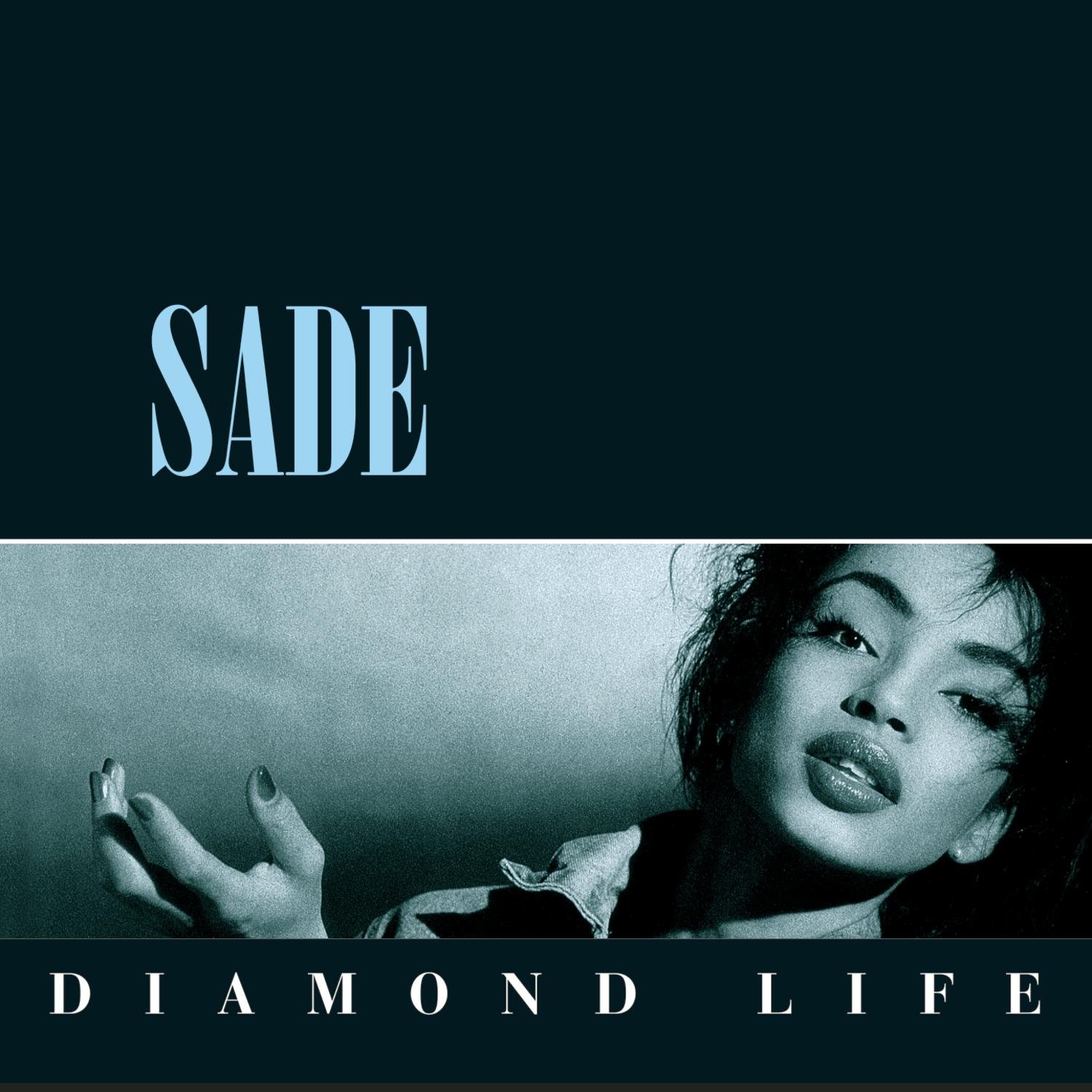
Albums of Influence: Diamond Life by Sade

"Diamond life, lover boy..."

Released on July 16, 1984 in the UK, Sade's debut album "Diamond Life" is a perfect record.

While very much of its time, the album also sounds like a classic. While some choices (chorused guitars, some gratuitous sax) and technology (a hint of DX7 "epiano") slightly date the sound, it has remarkably restrained and neutral production for an album of that era.

I first heard it like everybody else did -- on the radio. I taped the album from a friend (on the reel-to-reel recorded I had salvaged from the basement!).

I was surprised how much I liked "Diamond Life", given how little it had in common with the other music I was into at the time. It wasn't filled with synthesizers and drum machines. It wasn't edgy, weird, arty, or new wave. 

It was, relatively speaking, conventional. Its comparative subtlety and aspirations of refinement did separate it from the other garish strivers on the charts, and its very quiet and understated elegance were their own strong statement. 

But I kept coming back to it, because it was "cool", in every sense. The songs were great. Memorable, without resorting to gimmickry or cheap hooks. Strong melodies, solid playing. It had some heart and soul beneath its lustrous surface. 

I still like listening to this record. It is easy to enjoy when paying attention, good background for dinner or parties, and everybody likes Sade.

"Diamond Life" was a smash success, selling over 6 million copies, and held the record for best-selling debut by a female vocalist for 24 years. It immediately gave the band the freedom to do what they wanted.

It turned out that what they wanted to do was more of the same -- carefully crafted jazz-influenced pop records, with a gradually increasing amount of time between them.

Sade doesn't really have any bad albums (though I listen to "Lovers Rock" the least). They're all pretty great, with a few being transcendent in places. But I don't think any of them have the same consistent high quality of "Diamond Life".

This record made me re-consider fashion (transient, flashy, disposable) and style (slow, understated, timeless). The older I get, the more I appreciate what Sade and her band did on "Diamond Life" and the rest of their records.

I have cribbed beats, bass lines, ideas, vibes, tempos, and riffs from their work over the years. This is most obvious and conscious on several tracks from my 2010 record "Reflection".

Friday, April 10, 2020

Albums of Influence: Call of the West by Wall of Voodoo

Wall of Voodoo and Stan Ridgway taught me how the limitations and tropes of genre and pulp can provide palettes, fuel, and launching pads for art.

I first heard Wall of Voodoo on the "Urgh! A Music War" compilation, but it was either Steve Huybrechts or Rich Wagner who played me a rare 12" single that including a remix of their cover of "Ring of Fire" and had a live medley of themes from "The Good, The Bad and The Ugly" and "Hang 'Em High".


Wall of Voodoo had an immediately identifiable sonic palette. The beats were provided by a rickety, ancient drum machine (a Kalamzoo Rhythm Ace) supplemented by a live drummer playing temple blocks and other odd percussion. The guitar player used a Flying V, but instead of busting out metal riffs, he plucked out clean twang that would have made Duane Eddy envious. Old organs and primitive synthesizers played 5th intervals. And all topped by the distinctive voice (my wife can't stand it!) and lyrics of Stan Ridgway.

The music was pop, but informed by Ennio Morricone as much as The Beatles or other bands. Their first EP had some weird instrumentals reminiscent of film soundtracks -- the band itself had started when Ridgway was trying to compose film music. Their songs had some of the sharp angles of  Californian late punk and early new wave, but also suggested sweeping desert vistas. It swapped punk's aggression for cowboy swagger.

They also had a distinctive and focused visual identity, with great, evocative album art. All the pieces fit together -- the sound, the lyrics, the images. Total and complete art.

I was sold.

By the time on board, they had 2 albums out on I.R.S., the coolest of the cool labels. The first one I picked up was their second album, "Call of the West".

The album kicks off with "Tomorrow", which lays out the band's accessible and quirky sound. The lyrics are about a guy who keeps putting things off until tomorrow, and then there's a nuclear war. Other songs on the album document heartbreak and the emptiness of modern society, all seen through the strange prism of Ridgway's pulp-influenced writing.

The entire album is great, with hooky, memorable songs front to back. Perhaps the best song is the title track, which spins Wall of Voodoo's sound into a towering epic.


The big hit single was "Mexican Radio", which has all of the band's signature elements but swaps subtlety and emotion for a poppy sugar rush. It got radio airplay, and courtesy of a video weird enough to accompany the song and band, MTV play, too. It's a great combination, but unfortunately cemented the band's public image as a goofy one-hit wonder, and overlooked their darker and more interesting work. 


Of course that success ruined the band. After playing the legendary US Festival, Ridgway left the band for a solo career. The band continued on with new singer Andy Prieboy, but the magic was gone, and the band faded away after one strong song ("Far Side of Crazy", which doesn't sound like Wall of Voodoo at all), and three more largely unremarkable albums.

Perhaps it is for the best. While the band's early sound was distinctive, it was quite limiting. Ridgway took his unique voice and vision and continued to refine and expand it.

Ridgway's solo career kicked off with a brilliant collaboration with Stewart Copeland -- "Don't Box Me In" for the movie "Rumble Fish". Ridgway made a pile of solid solo records with great (if more conventional) self-production, and lyrics that were miniature movies or short stories.

He had minor college radio hits with "Camouflage" and "Drive She Said" from his first solo album "The Big Heat". His second album, "Mosquitos", had "Goin' Southbound" and "Lonely Town". He went on to write some records for kids and do film scoring. 

Wall of Voodoo's first album, "Dark Continent", is just as good, but slightly darker and rawer.

Wall of Voodoo also made me start a band. In college, on a break from my "real" band, some friends and I wanted to do something fun. So we fused Chris Isaak with Wall of Voodoo. Drum machines, twangy guitars, western tropes. 

It was something both goofy and beautiful, funny and sad. Wall of Voodoo illustrated how a band could embrace all of that. Their music was ridiculous, but also transcendent. 

Thank you, "Call of the West".

[This post was partially motivated by Alex Patsavas' piece on NPR]

***
***

Stewart Copeland and Stan Ridgway - "Don't Box Me In"


Stan Ridgway - "Drive, She Said"


Stan Ridgway - "Lonely Town"


Stan Ridgway - "The Big Heat"

Wall of Voodoo - "Tse Tse Fly [live]"

Thursday, April 09, 2020

Albums of Influence: Joshua Judges Ruth by Lyle Lovett

I am not entirely sure how I got this record. I think I picked it up while I was working at The Record Plant -- I recall a pile of them being around. My CD has a hole drilled through the case and booklet, which indicates it was a promotional copy.

Back in the 1990s, when I was a music professional, I was constantly receiving free CDs. Because I was young and poor, always interested in hearing something new,  and music used to be valuable, I took it home to listen.

I didn't know anything about Lyle Lovett, other than he was a "country singer", with a reputation for being quirky. I suppose I was expecting something goofy and/or lame, a jokey, hokey borefest.

Instead, I heard a beautiful and surprising record. The production and recording are pristine, clear, and minimal (probably why it was lying around the recording studio). For a guy who used to advertise his "Large Band", Lovett's recordings on this record are sparse, and filled with top-shelf session players.

The songs are understated and full of feeling. I was particularly struck by the slower tunes on the record. "North Dakota", "She's Already Made Up Her Mind", "Baltimore", and "Family Reserve" blew me away.

"North Dakota" is perhaps the best on the record. The shards of piano, Rickie Lee Jones singing. The wide open space. The heartbreaking lyrics.


I suppose it is country -- that's the genre you'll find Lovett filed under. He sings with a mild drawl, his writing has some "country" tropes, and his instrumentation (acoustic and electric guitar, piano, bass, drums) and note choice move him into that territory. But a few tweaks and he could be a folk artist. It's certainly not Toby Keith or whatever your avatar of Stetson-hatted, boot-wearin', ass-kickin', y'all-hollerin' "country" is.

This album reminded me that great art comes in all genres, and that we often benefit from approaching art with no expectations and an open mind and heart.

I haven't really liked any of his other records that I heard, but I still love this one.