2025 was another challenging year, which brought some significant changes.
One of the most difficult aspects was being confronted every day with the news. This includes the actual contents, typically the cruelty, stupidity, and corruption of the current regime. But it also includes the obvious degradation of the news purveyors. Once-trusted operators like the Gray Lady now normalize the worst of things, or platform idiotic opinion columnists (who seem to find new ways to be clueless). Most disturbing is the contrast -- a headline that talks about blatant violations of the Constitution above a listicle with a title like "We tried the 10 best air fryers -- Here's the one you should buy!" or some clickbait celebrity gossip. If that's what the New York Times is doing, what does that say about the people who write the Times and those of us who read it?
My social media feeds increasingly featured professional content creators and advertising, and I intend to take a break from social media consumption in 2026 (though I expect I will still be posting about my music and other creative work from a dashboard). It became harder to square the time I spent with those sites with the meager returns I got (mostly distraction, with a dash of emotional activation).
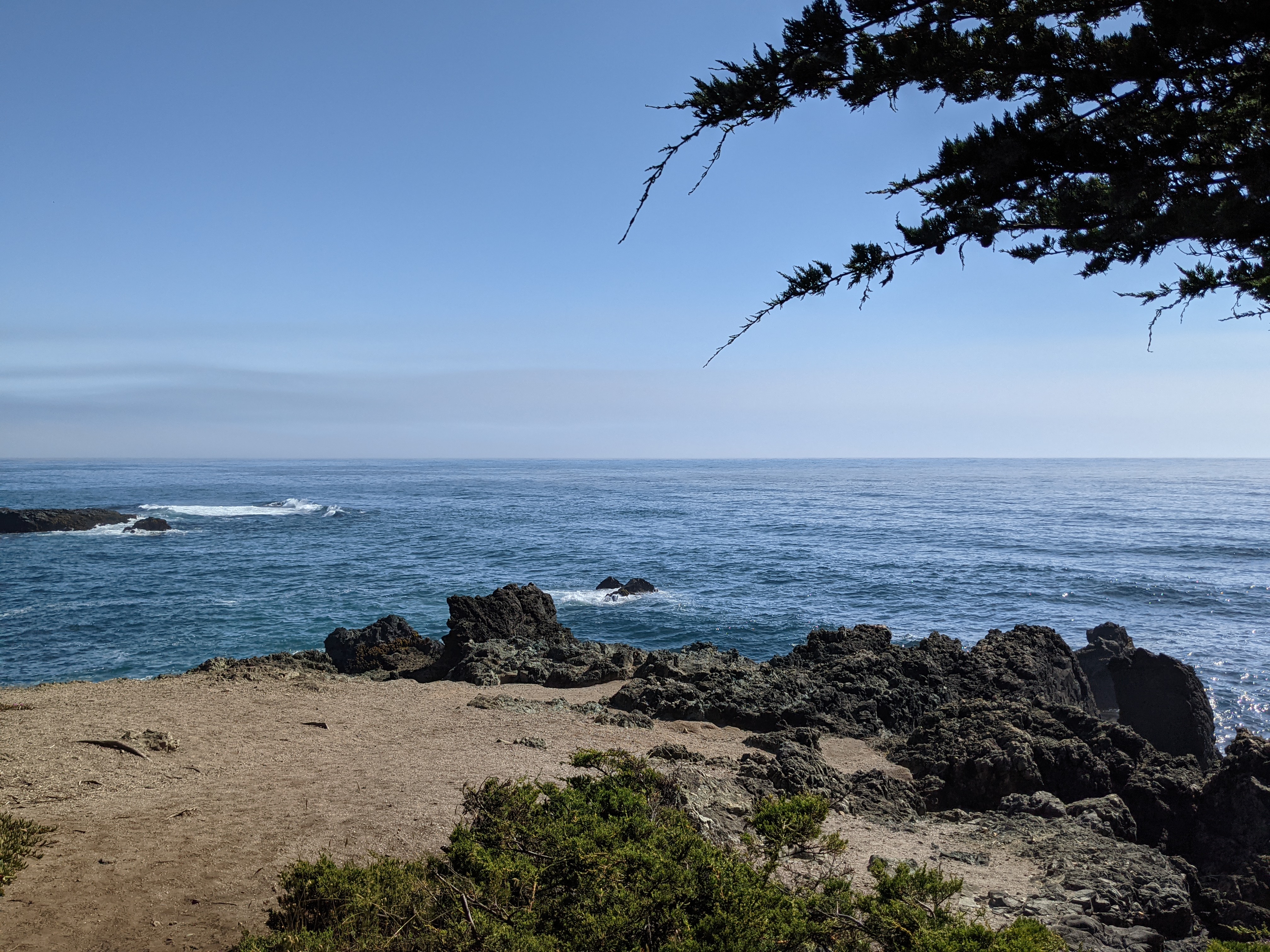
In March, I got out of town to my happy place for a bit, a nice short break between school and life. I finished a new song for Sid Luscious and The Pants.
April saw my 3rd bout of COVID, which was unfortunate but ultimately fairly easy. It is strange how normal this seems now, when just a few years ago it would have been cause for panic. The miracles of modern medicine and time passing, I suppose.
In May, I completed some small home improvement tasks. We saw Nick Cave in concert, a fantastic show by an artist who had been on my must-see list for many years.
June brought a significant life event: the death of my father. The impact continues to reverberate, and I am still working through a complicated mix of feelings and thoughts. I find myself thinking about him more than I expected. I have few regrets about my relationship with him, but "few" is not the same as "none".
I had a birthday in July. I went down to Carmel-By-The-Sea for a small vacation, to walk around, browse some used records, and rest before the school year restarted. Weather and earthquakes conspired to limit my options a bit, but it was still lovely.
In August, I started my final year of graduate school. This included beginning to work as a therapist trainee, counseling students at a local high school. The entire process, from the training to actually doing sessions with students, has been educational and transformative. Between grad school and the high school, I was busier and harder-working than in some years of my corporate career. It isn't lucrative (I'm working for free!) but it is satisfying. The weeks fly by.
The back half of the year was primarily occupied with school and work. Sid Luscious and The Pants took the stage again in October, playing at the Kilowatt in San Francisco. I reconnected with an old friend who was passing through, a reminder of how important relationships can be. At my age, I can't make friends like that anymore -- there just isn't enough time.
The year closed out with a nice getaway for a few days, and a break from all of the school and the work, giving me a chance to catch my breath.
By almost any objective measure, this is the greatest time to be alive in all of human history. Poverty is at a low level, and even what it means to be poor represents a lifestyle better than how many people lived throughout history. Even by recent standards, life is better today for most people than it was a mere 25 years ago, to say nothing of 100 years ago.
But the 21st century is not without its own challenges. Despite the objective improvements, life feels precarious these days. Many of the most notable technological developments of the last decade have been failures, scams, or both. Theranos. Wearables. Smart homes. Blockchain. Cryptocurrency. The ongoing degradation of social media and the general enshittification of many other services.
While it might be a good time to be alive, it feels like the experience of being human has been compromised.
What does it mean to be human?
Tools
When I was young, I was told the defining characteristics of humanity were its development and use of tools, enabled by the opposable thumb and a large and complex brain.
When you think of “technology” these days, what do you think of? Apps? Smartphones? The internet, whatever that is these days? The miracle of MRNA vaccines?
These are all iterations or updates of ideas and products that have been around for a long time. We think we are living in a wondrous present filled with futuristic innovation, but the reality is most of the 21st century so far is just updates of old ideas, perhaps enabled at new scale or with new shamelessness, or more likely just new marketing.
The beginning of the 20th century was a different story. No time in recorded history could match the euphoria and curiosity about the future that gripped the Western world around 1900. The previous 2 decades had produced telephone, the light bulb, the automobile (including new assembly line mass production techniques), and in 1903 the airplane. Humans could fly.
In 1905 Fritz Haber and Carl Bosch developed the Haber-Bosch process for making ammonia from its elements, a milestone in industrial chemistry and helped feed the world.
These were not incremental improvements on existing ideas and technology (like a cellular phone or Compact Disc), but were an explosive expansion beyond what had previously been assumed were the limits of human possibility.
By 1915, every single one of those innovations would be transformed into an horrific weapon of war, and deployed to kill human beings on a scale that was also previously unimagined and beyond what people had assumed was possible.
The fist picks up the club, then the sword, then the gun. These are ways of applying force at a distance. We end up in 2025, where combat often means pushing a button to kill a person you cannot even see. Or all the people.
We have built tools that exceed our ability to wield them, or to even comprehend them. Aside from weapons of total destruction, we have created cheap food with little nutrition value but plenty of calories and tooled ourselves into an obesity epidemic. We built the greatest information collection and distribution system in human history, made it open to all, and then filled it with lies, manipulation, advertising, and a soupçon of sentimentality.
Technology always has consequences, and is always used in unexpected and unanticipated ways. Not all of them are good.
And now there is artificial intelligence, or AI. The dream of AI is that humans can create a computer program that is “intelligent.” But what does that even mean?
The hilarious and sad thing is we don’t know. And I mean this in both the sense of “we don’t know what a thinking, intelligent program does, or how to make one” but also “we don’t even know how we think, or what intelligence in humans -- or any other creature -- is.”
That has not stopped over $300 billion in investment from just the United States in the last 5 years. The combination of weird optimism and desperate greed strikes me as particularly human.
AI isn’t new
There’s a Greek myth about Talos, a big bronze robot that protects Crete by flinging boulders at ships. This dates back to 700 BC or so. It is somewhat telling that even back then, AI was used for military purposes.
I think our modern conception of AI dates back 100 years to RUR -- Rossum’s Universal Robots, written in 1920 by Karel Čapek. It is where the word “robot” comes from, being derived from the Czech word “robota”, and means, more or less, slave labor. The name “Rossum” translates to “brain” or “intellectual”.
The play covers all the issues you can imagine. After wondering what it means to be human, and realizing they are vastly more capable than their human creators and masters, the robots rise up and take over the world, displacing humanity. It is The Terminator. It is Blade Runner. It is a critique of capitalism and the use of technology for war.
But this is art, this is speculation. When I say AI isn’t new, I also mean there’s already been technology that can pass the Turing Test. I am speaking of Eliza.
Eliza is a computer program created in 1964 by Joseph Weizenbaum. Weizenbaum was trying to create a program that worked like a person-centered therapist in the style of Carl Rogers. PCT, or Rogerian therapy, has the therapist reflect a client’s statements back to them. (You can try Eliza here.)
Weizenbaum thought it was somewhat silly and limited -- he had programmed Eliza, he knew how it worked, how little it actually did, and how Eliza absolutely did not and could not think. And yet, his secretary tried it, and quickly asked Weizenbaum to leave the room, because she was legitimately “connecting” with the machine. As far as the secretary was concerned, she was having an important, enlightening conversation about private matters.
Weizenbaum had survived the early years of Nazi Germany. He endured a challenging childhood, and later, a divorce where he lost custody of his child. He got into computers and psychoanalysis. By the early 1960s, he was working for General Electric, where he built computers for the Navy that launched missiles and computers for banks that processed checks.
He was asked to join the MIT faculty not long after, where he worked with legends like Marvin Minsky, and John McCarthy -- the man who coined the term “artificial intelligence”.
Weizenbaum was no dummy, and no booster of technology. He spent a lot of time thinking about what it means to be human. By the 1970s, Weizenbaum called AI “an index of the insanity in our world.”
He saw the so-called computer revolution as going backwards, the wrong direction. He felt it “strengthened repressive power structures instead of upending them. It constricted rather than enlarged our humanity, prompting people to think of themselves as little more than machines."
Joseph Weizenbaum
By ceding so many decisions to computers, he thought, we had created a world that was more unequal and less rational, in which the richness of human reason had been flattened into the senseless routines of code.
Weizenbaum’s thinking had been influenced by his experiences in psychotherapy. Unlike his colleague Marvin Minsky, he did not see the human mind as a “meat machine”, he saw it as something fundamentally unknowable, opaque, deep, and strange.
Weizenbaum knew Eliza was a trick, and he could see how this trick would lead people to see computers as having actual judgment and being deserving of credibility. Weizenbaum knew they had neither.
Randomness
I have been working with computers as musical devices since the mid-1980s. Initially, one thing people loved about computers, sequencers, and drum machines was they kept perfect time. Give them a tempo, and they’ll stay locked to it forever, like a metronome, perfectly repeating what you asked them to play.
But artists realized this didn’t feel right. It felt cold, inhuman, too perfect. Real drummers and real players were better, or at least different. New music was made that leaned into this perfection and coldness, but many people wanted something that felt more human.
Programmers responded. They added a feature called “humanize”. This feature would randomly vary the timing and loudness of the notes. The more you increased the value of “humanize”, the more frequently the variations happened, and the more extreme they became.
This is what the programmers thought being a human was -- like the machine, but randomly sloppier, with the extreme settings producing something comical and unlistenable . “Being human” was reduced to being an inferior version of the machine.
It turns out that teaching machines to play music with “human feel” is far more difficult than people thought. Because it isn’t about variations in timing or volume, random or otherwise. It’s not just that “feel” and “swing” exist. It is how they exist and what drives them. AI cannot “feel the music”. All it can do is analyze the output of people who did feel the music, and perform a shallow interpolation.
Creativity
Alban Berg wrote strange music. He was a disciple of Arnold Schoenberg, but Berg wanted to wed Schoenberg’s new 12-tone system to German expressionist ideas, to get at the unconscious, to get at intense feelings. In order to do this, he created something genuinely new and controversial. To some, his masterpiece opera Wozzeck is bizarre garbage. To others, it is sublime. But all agree nothing like it had existed before.
One can look at all the major 20th century art movements -- impressionism, expressionism, Dada, surrealism, futurism, cubism, minimalism, and so on and see them as mere reactions or responses to what came before. To some degree, that is true, but it ignores the passion, the fury, the desire that fueled that need to create something which felt new and unprecedented. It also ignores the obsessiveness, silliness, darkness, and other feelings that drove artists to create all those things the way they did.
AI in its current state is incapable of generating anything new. AI cannot create from a place of feeling or memory, for it has none. AI did not have a traumatic childhood or a loving and supportive family or a failed first marriage or money problems or substance abuse issues. AI has never looked at a painting and felt peace or beauty or challenged or disturbed. It has never felt anything at all.
I have been writing songs for almost 40 years. I am still learning how to do it. A good chunk of my work involves interpolation, or being inspired by the work of others. But even when I am writing in the style of someone else, my own strange self seeps through. I cannot help it. I will put in my own feelings, my own twists, my own obsessions and favorite ideas.
The machine cannot do that. It has no inspiration, no favorites, no artists it loves, no artists it hates, no feelings or memories attached to anything it has ever ingested or “created”. It has as much pride, satisfaction, or frustration in producing art as a vending machine has in dropping a soda can into the pick-up slot.
It may not matter. I have written before about the sorry state of art and art literacy in our modern times. When it seems like all media is merely a way for internet celebrities and major corporations to monetize their brands, perhaps greatness doesn’t matter, and instead custom-fit pandering content is the future.
But AI is never going to make Bruce Springsteen’s “Nebraska”. AI is never going to make Bon Iver’s “For Emma, Forever Ago” or Low’s “Double Negative”. AI is never going to create Citizen Kane or Five Easy Pieces or Birdman. It might create something like those things after they’re out, but AI is never going to do it first. AI is never going to rebel against the status quo, it is never going to write something because it has to, because its brain is on fire with ideas and it is unable to sleep.
(Emotions &) Relationships
Some argue that our relationships are the defining characteristic of being human. When you think about your life so far, it is possible you think about physical objects -- the house you grew up in, your favorite stuffed animal, your musical instrument. But I would bet that you think most about people, the times you had, the relationships you had, and how they made you feel.
AI is never going to be happy to see you. It will never be jealous of your success. It will not miss you when you’re gone. It won’t get misty about the old days.
I have learned the hard way that relationships require vulnerability to be truly intimate. You can never have a real relationship with AI, because AI has no vulnerability. It has nothing to lose. It has no warmth to give, no deeper layers to show, no stories to tell.
AI will never trust you more or less, and it will never respect you more or less. AI is never going to have a bad day or a bad week and need your comfort or understanding or help.
AI is incapable of relationships in either direction, any more than a toaster is.
Death
Humans are considered to be unique among animals in that we understand and can conceptualize the idea of our own death. You are going to die. So is everyone you ever loved or knew. Reckoning with this inescapable reality is something we all must do at some point in our lives.
In my own experience, it is significant and transformational. 6 years ago, I had cancer. I was extremely fortunate, and survived -- for now -- with some physical damage and scars.
Last year, I had to put my father into assisted living. He is 81. He has vascular dementia and has been declining rapidly for the last 2 years. It is unlikely he will be around much longer. He is already diminished mentally and physically, fading away before my eyes.
These 2 events and the close contact with the Grim Reaper changed me. You have likely already had a few encounters with mortality, and you will have more, if you are lucky. You may have to bury your own parents some day. It will change you, and memories of them will haunt your life and your dreams.
You are still young, and yet, I am sure you think about death differently now than you did when you were a child, or 10 years ago. I was your age once. Now I am 55 and the realization that I have perhaps 20 or 30 years remaining -- and that the last third of those probably won’t be much fun -- is sobering, and gives my every remaining day a sense of urgency.
AI does not die. It has no conception of death. It knows no sadness or melancholy at the thought that everyone it has ever known is fated to oblivion. AI cannot cry because it misses its dead friends. AI will not change its life or thinking or perspective or philosophy in any profound way because of what it thinks or experiences, because it cannot think and does not experience. AI won’t rue or celebrate the wasted days and years of its youth. It has no concerns about losing its vision or ability to walk or its memory.
AI does not miss its mother. It cannot miss its friends. And it cannot translate any of that feeling or knowledge into any insights or changes in who it is, or its behavior.
As humans, we do. We have no choice.
Therapy
Last year, I started grad school to become a therapist. More than one of my friends has asked me if I am worried about AI therapists -- the offspring of Eliza and LLMs, the next wave of chatbots -- taking all the jobs or displacing human therapists. One of my friends is already using their own ChatGPT instance as a kind of therapist.
In this past semester, we studied Carl Rogers -- the man whose particular therapy modality was used as the basis for Eliza. Rogers himself said the only thing that mattered was the relationship between the therapist and the client. The therapist needed to do 3 things: show empathy, view the client with “unconditional positive regard”, and be “congruent” -- to live by their values. Doing that, and reflecting what the client says, is enough for the client to have a positive outcome.
Decades of research have validated Rogers, showing consistently that the best predictor of good therapeutic outcomes is not what kind of therapy is used, or how long, or anything other than the quality of the relationship between the therapist and the client.
Here’s what I know. No AI can be a Rogerian therapist. Machines cannot show empathy, for they have none. Empathy is the ability to understand and share the feelings of another person. Empathy means being aware of another person's emotional state, seeing things from their perspective, and imagining yourself in their place. Machines are unaware. They have no imagination. All they can do is repeat what other people have said.
AI cannot view the client with “unconditional positive regard”. They can fake it and use positive words, but machines have no regard. Their gaze is as vacant as that of a corpse. And AI cannot live by any values, for AI has neither life nor values.
Sure, you can have a therapy-like experience with a chatbot. It is not the same. There are some people who may find it better or more useful for themselves in the short term. Some people prefer artificial fruit-flavored candy to actual fruit. Some people would rather masturbate than have actual sex with an actual human. It is not the same.
Weizenbaum said that it would be a “monstrous obscenity” to let a computer act as a therapist in a clinical setting.
Humans have an innate and strong cognitive bias towards anthropomorphism. Modern technology is exploiting that bias. Studies have shown that the level of anthropomorphism in AI products affects consumers' purchase intentions and brand evaluations, and that anthropomorphic design cues, like human-like voices or appearances, can increase trust in robots and other agents. Thus companies implement these features, so you will trust their robot agents, think favorably of their brand, and buy more stuff. It is manipulation of your cognitive bias for their ends, and that’s before we get to their actual platforms.
The Platforms
So let’s talk about those platforms for a moment, and how they affect us as humans.
Back in the pre-smartphone, pre-internet days, life was a little more difficult. But it was also yours. If you had a computer and bought a program, you owned your copy. It would run forever, bugs and all, unchanging. If you bought a calculator, it was useful forever.
Many products you buy today are integrated hardware and software, and often rely on some kind of PC to work. If the manufacturer stops supporting your thing, either because they went out of business or just decided they didn’t want to deal with it anymore, it will eventually stop working. This has happened with stereo equipment, mobile phones, home security systems, music recording and playback software, and more.
I still have books, vinyl albums, and compact discs I bought in the 80s. They are mine, and I can use them any time I want (assuming I have a turntable or CD player). But the books on my Kindle, the music I stream from Spotify, the games I buy, excuse me, license from Steam -- though I paid for them in transactions designed to look like purchases, they are not mine. If the companies who own the platforms decide to, they can deactivate individual pieces of content or the entire platform, leaving me with nothing.
Today, all of our life activities are tracked by apps and platforms, which mediate the experience, show advertising, take a cut of the action, and mine and sell our data. Your smartphone itself is a platform on a platform, with a multi-billion dollar company making and selling the hardware and operating system, which report back all sorts of data. The company can and will grant law enforcement access to your phone. The phone itself is running on a network, operated by another multi-billion dollar monopoly in all but name. That network company may be funneling data intentionally or not to governments and corporations.
You open your phone to read the news. You almost certainly aren’t looking at an actual website for a news provider anymore (if one can call Washington Post -- owned by billionaire Jeff Bezos, CNN, owned by Warner Bros./Discovery, or the once-great New York Times “NEWS” these days).
You are probably looking at a social media feed. A multi-billion dollar company called Meta owns Facebook and Instagram. X, formerly Twitter, is owned by billionaire and world’s richest doofus Elon Musk, who treats it as his personal vanity website. TikTok is owned by Chinese investors and the Chinese government exerts considerable control. YouTube is owned by Alphabet, who also own Google and its suite of products, including Gmail, and the biggest advertising business in the world.
All of those companies control what you see. They are effectively unregulated and can do whatever they want. Once, social media was nothing but what you and your friends posted. Now, those are the increasingly rare oases in a vast desert of advertisements and “suggested posts” from professional influencers. You literally don’t know what you’re missing, or what you’re getting. What you’re mostly getting is content selected to promote engagement, which is often achieved by activating your negative emotions -- rage, despair, sadness. The robots are pushing our buttons, and they are good at it.
Go out to get some food, and your phone will track you. If you disable those features (which require you to disable other useful things), your credit card will do just fine. Your purchase data is aggregated by the 3 big credit ratings bureaus, all of whom have built shadow dossiers on all of us, with our social security numbers, credit ratings, purchase histories, former addresses, and more. That data is packaged and sold all the time, including back to the big tech companies, who use their own sophisticated tools to match it up with their own shadow profiles of you.
If you use Apple Pay or similar features, other companies get a cut and a chance at the data, too. And of course, you want to put in your phone number or loyalty number to save a few bucks, even as doing so shares more of you with the technosphere.
At your job, if you’re lucky enough to still have one, you are working on yet more platforms. Slack. Microsoft Office. Google Suite. Workday. The Atlassian family. Salesforce. On the plus side, corporations demand autonomy and privacy, so your data (or rather, the data belonging to your employer) isn’t shared. On the minus side, nearly all of these products are ugly, tedious, and don’t connect to each other.
Even romance is not immune to platforms. Once an unthinkable invasion of privacy, even dating is now mediated by platforms. Tinder. Hinge. Bumble. The first two are owned by a single company, Match Group, who also own Match, PlentyOfFish, Meetic, OKCupid, OurTime, and Pairs. Not everybody looks for companionship this way, but most recent data shows that half of people under 30 have used dating apps. Your dates are monetized and data-scraped. You have no idea what kind of influence these companies are exercising. The machine, the platform, the billionaires, have become intermediaries for love and connection.
Free time? You’re watching streaming channels, where the content is ever-changing and disappearing. We have more choices and more content than ever before, but it all feels more trivial, weightless, and superficial than ever.
Our lives are mediated by these platforms now, and these platforms are owned either by faceless, soulless corporations, or worse, mercurial billionaires who think they know best.
AI is likely to be one more, pushed into everything until it is inescapable.
What about simulation?
Some may think that any of the above experiences I cite and discuss can be simulated or emulated. Let’s just program the AI to act sad or worried, or otherwise try to be human.
But the key thing here is the AI is not actually sad or worried or happy. It is executing a pantomime of those things, based on someone else’s observations of the superficial, external signs of those emotions. It is like a sociopath practicing smiling and frowning in a mirror -- the AI doesn’t feel the feelings, but it can put on a mask that might help you suspend your disbelief.
Creators of AI will absolutely add this sociopathic mask, because as we’ve said, it helps you buy what the AI is selling, in every respect. But this is deception and dishonesty. It is a used car salesman, repeating your name to you because Dale Carnegie’s 1912 book said that it made people like you. It is the phoniest of smiles pasted over the robot’s face.
Simulation is also inherently reductive. The question is “what is the least amount of work we have to do to create something good enough?”
Simulation isn’t intelligence. I can simulate being wise by reading the answers out of the back of a textbook. All it shows is that I know how to repeat what someone else figured out or said.
It’s not all bad
Only fools make predictions. AI is still in its early days, and it is possible that it will get better and find a wide range of uses that don’t just lead to impoverishment of the human experience and manipulation of our bank balances.
There are some clear areas where AI is promising, mostly tasks where humans are required to learn and analyze a vast amount of complicated material, or where humans are required to, more or less, act like robots themselves, doing limited, repetitive tasks. You’d be surprised how many of these jobs there are.
An example of the former is medical imaging. Many medical test results depend on a highly skilled human looking at slides or other imagery and deciding whether or not something is abnormal. Humans learn how to do this by looking at a whole bunch of slides and being told which is good and which is bad. AI with computer vision can be trained on every image ever taken, and can make determinations much faster and at scale. AI can even give you a confidence score about how certain it is, and for edge cases, those highly skilled humans can step in to validate.
An example of the latter is something like being a customer support representative, where your job is to follow a script to the letter based on user information, to be professional and cheerful, and not react to rude or emotional people. AI with voice synthesis will be great at this, and it will be even more infuriating to deal with than a clueless human operator.
Another example of the latter is much lawyering. Many lawyers are paid lots of money to essentially fill out special legal Mad-Libs or forms. AI is going to be great at this, but it is unlikely the various bar associations will approve any of this. So these lazy lawyers will now have AI do all the work and sign their name to it. Things won’t get better, but they may get a lot cheaper. Don’t go into this kind of law if you’re thinking about it!
Conclusion
This is a little dark. I’m sorry about that. I do think our current moment is a bit dark, though. While it is possible to recognize that generally things are better than they have been, when we get to specifics, it feels kind of grim.
Because the tools we build and take up aren’t inert. They amplify who we are, for better or worse. And they change us. To paraphrase Nietzsche, when you wield a tool, the tool also wields you. The things we build, particularly our technology, change us. We can see it in language, where the limitations of texting and phone keyboards combine with decimated attention spans to produce clipped, nuance-free communication ever more reliant on acronyms and symbols, and the stripping of contextual cues and robustness means people misunderstand each other more frequently.
Perhaps we are seeing it in other levels of life, too. We are practically living inside the machine now, with our robots and platforms in every corner of our lives.
As I consider what artificial intelligence means now and tomorrow, I can’t help but wonder if the real revelation is not about the nature of the machine’s supposed intelligence, but our own.
How willing we are to convince ourselves that we are smart and special while simultaneously demonstrating how quickly we will reduce our options and lives down to the binary choices offered by our own creations.
I believe we, you, can still make a difference and make choices in the work we do and the lives we lead that bring us to a more enlightened, more intelligent, more human place.
--
This is an adaptation of a talk I gave for Mark Delong's graduate-level technology seminar at Duke University on 12/03/2024.
2024 was a year of changes. I lack appropriate distance and time, but I believe will look back at this year as hinge, turning point, and marker, separating "before" and "after".
The year started with my exit from a job at Osso VR, and perhaps an industry and even a career.
I took advantage of the downtime to deal with home repairs and stuff related to my ailing father and his late partner's estate. Pro Tip: Do not agree to be the executor for anyone's estate. Refuse if you can. It is a huge hassle and liability. There is no upside.
I spent time with friends, including some great walks with old friends I had not seen in quite some time. I took a couple of trips, including a peaceful vacation down to Carmel-By-The-Sea, and visiting friends back east and down in Los Angeles.
Physically, this was a year of increasing nuisances. Various nerve insults and impingements, some bone stuff, and other things nobody wants to hear about. I'm doing OK health-wise, but replacement parts are hard to come by at this point.
It was a solid year for music. The album I appreciated most was The Cure's "Songs of a Lost World".
I finished an ambient electronic album with my friend Thomas. Given how long we have known each other, it is surprising it has taken us this long to collaborate on something. Look for a release in early 2025!
My friend Matt took me to a stunning classical guitar performance in San Francisco, which was one of the highlights of the year and one of the best things I have seen in a while.
Sid Luscious and The Pants also reformed, with new members, new songs, and our first show since the start of the pandemic. It went incredibly well, and it felt great to be back on stage playing new material for a receptive audience.
Sid Luscious and The Pants, 2024 edition, live at The Kilowatt!
Of course, there was the start of graduate school, knocking out 3 classes in my first full semester. I am enjoying it so far, and optimistic and excited about the future.
There's plenty to be concerned about in the world. The US election was a deep disappointment, and the first few weeks afterward have already depleted my patience and goodwill for the goons, plutocrats, and other bad actors who are already complaining about their victory. You won, get over it.
Little progress was made this year on issues of substance, such as the climate. I do not feel like I have anything new to add regarding all that stuff -- I have written about it before, and not much has changed. I still think the biggest problem for all of us is the shocking income inequality and disparities between the super-rich and everyone else. It is like these doofs have never read a history book.
In the meantime, colleague after colleague got laid off or took a package, and are finding they simply cannot find another job, either because the jobs are being outsourced (to AI or cheaper humans) or eliminated. 2025 feels like it will be economically challenging, and even my moderately wealthy friends feel precarious.
If I were a billionaire, I'd be nervous, and I'd start looking at how to be a lot more generous before it is too late.
Perhaps a theme for 2024 was growth and change -- nothing stays the same forever, nothing lasts. That applies to good things and bad. I will try to stay optimistic and positive about the new year.
55 today. At least halfway, and maybe 2/3 of the way through my allotted days. The last few years have been challenging for all of us: American politics, a global pandemic, the ongoing slow melting of the environment.
I have also been dealing with aging and ailing parents and some of my own health challenges.
For me, and for some of you, this has also been compounded by personal turmoil and drought in the workplace. I was lucky enough to find a job in 2020. Luckier still to get ejected from it earlier this year. The corporate world seems more brutal, unforgiving, and silly than ever.
I am making a big change. After 30 years of being a product manager, I think I am done. I worked on and shipped many things I am proud to have been a part of, and got to work with some fun, creative, smart, and interesting people. But I think it is time for something new. This is convenient, because corporate America seems to be done with me as well, finding me too old and/or idiosyncratic.
Next month I start graduate school. I will be pursuing a Master's degree in counseling psychology, with the goal of becoming a therapist. I want to help people in a direct, clear fashion, and do work that I find meaningful and interesting.
It is a 2-year program that includes a requirement of 3000 hours of practicum. I'll be training for more than 3 years in total.
I recognize it may not work out. But I am excited for new challenges, a different kind of work, and a different pace for my life.
I am not sure what all of this will mean for the future of this blog. Therapists typically keep a low profile online. I have a few years to figure it out.
My product management career was mostly fun, always challenging, and sometimes lucrative. I owe much of it to two people in particular.
One is Tim Bratton, who thought I'd make a good product manager, taught me the basics of the job, and gave me incredible opportunities early in my career. I have thanked him regularly through the last few decades, but probably not enough.
The other is JP Lester, who taught me what good management looks like, how to play the corporate game with skill and with heart, and brought me in to all kinds of exciting projects.
Together, they gave me the opportunities that have defined my professional career. Thank you, both.
Thank you to all of my other colleagues, for putting up with me when I wasn't at my best, and encouraging me when I was.
Most of all, thanks to my partner in life Iran, who has been supportive through all of these ups and downs, successes and failures, job changes, and uncertainty. I could not have done any of this without you.
In the near term, I am still offering product management services as a consultant, contractor, or coach. Act now, supplies are limited, etc.
After 3.5 years, I am leaving Osso VR. Times are toughallover. I've been through this before, and while I am sad to be leaving, I am genuinely excited about the future.
The Osso VR team did amazing work, and I am grateful for the opportunity to assist in blazing a trail on such a necessary and revolutionary product. I believe that virtual reality surgical training is as much a foregone conclusion as streaming music was. However, like streaming music, the early days are difficult -- you have to do everything yourself, from scratch, the hard way. It will likely take a few more years to catch on and become practical. Streaming was slow going until the widespread adoption of the modern smartphone. I think VR still needs that kind of transformative change on the device side and in the public's mindset.
I started working at Osso about 6 months into the pandemic, in August of 2020. The first year there was unusual and at times felt unreal, perhaps appropriate for a company working in virtual reality. Those early pandemic days were weird for everyone. I did a series of 20th century music lectures on Wednesday mornings that first year for team-building, and watching the attendance grow week to week was satisfying.
I remember working through The Day San Francisco Went Orange, with the ash-choked air from the wildfires mixing with an unseasonable heatwave. Nothing says "work from home" like sitting inside an 82-degree house. Hey, if I'd wanted that, I'd have kept working in Tokyo in the summertime!
During my first 2 years, the company grew tenfold, and that was an experience and challenge in itself. It was exciting to be back in start-up land, seeing the rocket start to take off.
My product team -- Sanju, Cameron, Maritza, and Jakoby -- were some of the best people I ever got to manage (and I got to hire most of them, too). I will miss them and the rest of the staff. They are mission-driven, passionate, and young. This was perhaps the first time in my career that I found myself being the oldest person at the company by far. I was impressed with my colleagues at every turn. It makes me feel better about the future.
Osso VR's leader, Justin Barad, is an exceptional person. I remain grateful to him for the opportunity. We did not always see eye-to-eye, but I respect his vision and persistence. I wish him and the rest of the Osso team the very best of luck.
I am looking for another gig, and have some other exciting plans for the end of 2024. But for now, I'm going to take care of myself for a bit, work on some music, and do some more writing.
I hope your 2024 is going well. Drop me a note -- I'd love to hear from you!
2023 was difficult. At times, I called it "The Year Everything Broke".
Towards the end of January, the podcast I have been co-hosting went on hiatus. Each of the 3 hosts has had their own issues to deal with this year, and some of those issues escalated to a point where continuing is not possible right now. I miss talking with Michael and Dee, and I hope to get something else going soon. We are all doing the best we can.
This Old Fashioned may have been the best thing about 2023. It was certainly the best drink of 2023.
The torrential rains in January showed me that the front of my house was leaking, and likely had been for a while. I had to spend a shockingly large sum replacing all the windows on the front of the house, rebuilding my front steps, and getting the façade refinished. It was messy, noisy work that seemed like it would never end. I still need to get the place repainted, but the crew finally wrapped up in October. I am glad I was able to write the many large checks required to cover the repairs.
I caught COVID for the first time in March. It was not serious enough that I had to be hospitalized, but it was scary and painful. It was also disappointing, particularly given how diligent I had been masking, avoiding groups, getting vaccinated, and taking care of myself.
On July 2, my friend David Meyers passed away after a long struggle with a brain tumor. I had known David since I was a teenager. He was the very best of what humanity has to offer. If you want to understand something about him as a person, and have a good cry, listen to this podcast.
One of my aunts died in September from metastatic breast cancer. She was in her late 70s, had lived a good life, and leaves behind a grieving daughter and two grandchildren.
Towards the end of this year, I found I needed gum surgery. It was less painful and scary than I expected, but still unpleasant and not recommended. This also triggered a few other health scares that have all resolved positively for now.
I had to make more minor but expensive repairs to the car, as well.
The biggest difficulty was dealing with my aging father. For the last decade or so, he has been involved with a partner only a few years older than me. This partner was someone with a drinking problem, substance issues, and an abrasive personality. The combination put me in a state of heightened anxiety any time I was around my father and his partner, waiting for something bad to happen.
My father consistently chose this person over his friends and family, and they moved from Nevada to Hawaii to Thailand. At least my father was happy and secure, or so I thought. About two years ago, my father had a small stroke in Thailand. He and his partner said everything was fine, but my father then had two car accidents, one serious. When I saw them in late 2021, it was clear everything was not fine. My father was stuttering when he spoke, could now no longer walk without a cane, shuffled his feet, could not navigate steps or curbs without assistance, and fatigued easily. He was also quite obviously depressed.
I encouraged them to return to the USA, and in September of 2022, they did.
In mid-April of this year, my father called me early in the morning. He said his partner had pushed him down several times, said they weren't going to take care of him anymore, and had told my father to kill himself. I could hear the partner in the background, drunk and screaming. I told my father to call the police and go stay with a friend.
My father can no longer reliably read, write, or operate a computer. I purchased him a plane ticket and he flew down to Los Angeles to stay with my brother. I joined them a few days later to evaluate what we needed to do.
My father was practically catatonic from stress, cognitive impairment, and antidepressants. He mostly stared into space when he wasn't struggling to answer our questions or sobbing uncontrollably. We had him sign powers of attorney for medical and legal purposes.
We looked into his finances. My father was once a multi-millionaire, and considered a business wizard by many. He was now quite clearly broke, with his credit card debt exceeding his meager cash sums. His major assets are two properties, jointly owned with the toxic partner. Also, by this time, my father had borrowed tens of thousands of dollars from me and my brother. We canceled jointly-held credit cards and cut off the partner's access to my father's accounts.
The three of us agreed it was time for my father to go into assisted living, and he would stay with my brother until a place could be found, probably in Southern California, not too far from my brother.
During this week, his partner had been calling and texting my father, my brother, and me, leaving vile, drunken, barely coherent rants. These calls and texts were happening almost non-stop, so we all blocked the partner.
Plans in place, I flew back to San Francisco. The next morning, I was told the partner had gone on a drunken rampage, smashing up the rental home they had been sharing with my father. Doors had been ripped off hinges, holes punched in walls, artwork, vehicles, and property attacked with golf clubs. The partner was found unresponsive on the floor, covered in blood. They had attempted suicide, and were hospitalized. The partner had not been paying their health insurance bills, however, and once stable, the hospital ejected them.
My brother and I found an assisted living facility for my father in June. My father moved in. The partner eventually stabilized enough that I was able to have the occasional coherent conversation about selling property and untangling lives. In July, I was able to visit the rental house and move some of my father's belongings into storage. At that time, the partner told me they were going to Thailand to check up on the property, set up a bank account, and contemplate moving to Thailand.
On the morning of August 9, 2023. I received a phone call from Thailand. The partner had been found dead in their hotel room. The empty whiskey bottles suggested a drinking binge. It is unclear whether this was another suicide attempt or an accident. Regardless, I had to call the partner's adult children and let them know.
My father was distraught. Despite my uncovering evidence of physical and mental abuse from the partner, my father kept telling me he didn't want to live anymore. After all of the effort put in to getting him safe and taken care of, this was hard to hear.
The partner's will ultimately named me the executor of the partner's estate and will. Throughout this year, I have been dealing with attorneys in Nevada, Hawaii, and Thailand, trying to make sense of and get control of bank accounts and other assets. It has been like having a second job navigating phone trees, listening to hold music, talking to customer service agents, and sending documents to various addresses.
There is more to the story, much of it sordid and sad. It is hard for me not to be angry about all of it as well.
All of these events combined with challenges at work to make this an unsatisfying year at my job. I am not sure how much longer that will go on, but I have some plans for what's next.
The year rounded out with me catching COVID a second time in December. On the plus side, it was a much milder case than March. On the minus side, it meant that I had to spend half of my precious holiday vacation locked in my office, trying not to infect my wife.
I could go on about current events. I tried not to pay too much attention to the desperation, horror, and ongoing tragedies around the world. It helps keep my own problems in perspective at times, but reading and watching too much just made everything seem worse. American politics, the Middle East, the environment, Russia and Ukraine -- it was a daily barrage of bad news and failure. At times, it seemed the whole world was coming apart.
Despite all of the breaking, there were a few bright spots in 2023.
One is that Emily Hobson and I released an album (Cold Comfort) and a covers EP (You Got All Sad) as Snow Westerns, a slowcore/shoegaze/cowboy alternative rock band. Working on these records was fun and satisfying, and I am proud of the result.
In May of this year, my wife and I went to Spain for two weeks. Attending a friend's daughter's wedding was our pretext, but we added on plenty of extra days in Madrid and Barcelona. The food was fantastic, the weather was gorgeous. I made some good permanent memories. Most notable was that we walked everywhere, not using public transit or cars except for getting to and from our arrival and departure areas. I hope to go back some day.
I had a great birthday break up at Sea Ranch. I wish I could go there more frequently. It is truly my happy place.
Sid Luscious and The Pants are slowly reactivating. We are training up some new members and starting to sound pretty good. I hope we will be performing in early 2024, but regardless, it feels great to be playing music with a band again.
Part of that is my voice. Post-cancer, I have struggled to sing the way I used to. The treatments left my voice and throat somewhat compromised. I had been doing online voice lessons for a few years, but in 2023, my voice coach stopped doing lessons to return to graduate school. The work we did together seems to have paid off, however, and my singing is better than it has been in a long time.
I was able to use this for some online performances, notably UCSF's Art for Recovery group. I have been a part of this crew for 3 years now, and playing for them occasionally brought me satisfaction throughout the year.
I found solace and joy in seeing friends. I was able to reconnect with several people visiting from out of town, and had many great dinners and meet-ups with my Bay Area gang. No matter how dark, frustrated, or broken I was feeling, these people and shared moments always left me feeling energized and alive.
And the best thing about the year was my spouse Iran. She took care of me on many levels, and her love and support made everything bearable.
Thank you all for being here, for being present, for reading and listening. Here's hoping 2024 is better for each and all of us.
Our bodies replace about 1% of our cells every day. Some say all of your cells are replaced every seven years. While this isn’t really true, it suggests that our bodies are constantly dying and regrowing. We become someone new a little bit at a time, every day.
What is a scar? From my perspective, it is the body recovering from damage. Something happens, cells die, and are replaced, sometimes different than they were before. Some trauma is significant enough that it leaves a mark. A place where you might be tougher, skin thicker, as the result of an accident. You might be more or less sensitive.
These marks, this change, isn't always external. We've got these in our brains, in our spirits, in our hearts.
I might argue that as we age, we become nothing but scars. We accumulate so much damage, from accidents, pain, catastrophe -- what else is there to us? Every cell in my body has died and been replaced more than once, with each new generation perhaps learning from, responding to what came before.
My life comes from these scars, and my life is marked by them.
I have one on my left elbow, barely visible now, the remainder and reminder of being hit by a car twenty years ago. Traumatic, and at the time, one of the worst things that had happened to me. In hindsight, I got off pretty easy.
I have some scarring on my neck, both external and internal, a reminder of the radiation that saved my life even as it destroyed parts of me, changing me forever. I look at that part of my neck every day. No beard grows there. I can recall how long it was just a wet, infected wound, and how worried the doctors were. I feel how the internal scarring continues to change my voice. Every time I turn my head to the left, I feel the damaged muscles strain and tighten.
I treat it as a series of prompts and reminders: Life is precious. You are still here. Make the most of it. Do something. Be happy.
That’s not all. Like many people my age, I have tattoos. I was the first person I knew to get one, back in 1990. At the time, it seemed transgressive, and "rock and roll". A tattoo is just a self-inflicted, ink-filled scar. I have three now, each one marking different times in my life, when I was different person or with different priorities. They don’t hurt on their own, but I can remember getting each one, the person I was then, and how that person was hurting in different ways.
I am not sure if I will get another tattoo, but I am sure I will end up with more scars. Because I plan to live more, to have more lessons learned, more things to remember.
The author, recovering from being hit by a car, circa 2002.
A few weeks ago, my voice teacher told me she was not going to be teaching anymore, focusing on her advanced degree instead. She loved teaching voice -- her passion and interest for it led her to a graduate program -- but she needed her time and energy for her studies. It is what she really wants, so she is stopping teaching.
It had been nearly 3 years that we had been working together. I had to check twice. How can that be? It felt more like 6 months, but also like forever.
I have spent those last 3 years mostly at home. I created and taught a songwriting class. Made a couple records. Started a new job. Started attending an "art for recovery" online group. And have continued my therapy.
These days were a kind of smeary blur. Wake up. Drink coffee. Listen to some music. Sit in front of the computer. Stare out the window. Try to work. Get some exercise or not. Play some music or not. Maybe talk to someone on Zoom. Have dinner. Look at the internet. Try to sleep.
Three years. That's almost as long as all of high school or college. Yet when I go back over this time, the resolution of my memories, the real new experiences, the living of the last 3 years feels like it amounts to perhaps 3 months (if I am being generous) of what I might have experienced in high school, or college, or almost any period of time in my life up until about the last 7 years.
I realize I have been focused on safety and surviving, rather than living.
That is somewhat understandable. I had a serious illness 5 years ago, and that has taken me a long time to recover from, both physically and psychologically. It changed me physically and psychologically, as well. There was Trump. Job disruption. The ongoing slow-motion apocalypses of the environment and perhaps American democracy and civility. World War 3.
And of course, the pandemic, with losses of friends, dramatic changes in society and the world, and fear and uncertainty. So perhaps a defensive crouch was warranted for a time.
But the truth is I am going to die anyway. So are you. So is everyone. Probably not tomorrow, and in my case, hopefully not for a good 25 or 30 years. But it is absolutely going to happen, and probably sooner than anyone likes.
Knowing that, I think the question becomes not "how can I get more time?" It is "how can I live more with the time I have?"
I don't mean "live more" in the sense of dreaded and beloved achievement, the empty satisfaction of running a marathon or climbing a mountain or writing a book or any other kind of finish-line, bucket-list checkbox-ticking. I don't mean acquisition of trophies or material goods. I don't mean the obliteration of extreme hedonism.
I mean "live more" in the sense of finding a life that has more personal meaning and that feels more authentic. Getting back in touch with what I want, rather than what I "should" do, or what is "safe".
By the time one gets to middle age, one has enough actual life experience to temper dreams with reality. But one should also make sure reality leaves room for dreams, and I think this is where I have made errors. Too much reality, not enough dreams.
It gets easy let inertia take over. To keep doing today what you did yesterday, and hope it will be enough to carry you through to some kind of finish line. But that is not living.
The times in my life I felt the most alive were when I did not know what tomorrow would hold, but that I was moving towards something I was excited about. Music. A new project. People.
The outcome was uncertain, but the process was exhilarating. That is risk.
The fun part of rolling dice isn't knowing how they'll fall. It isn't even when they fall your way. It is the clacking of them in your hand, feeling all of the possible universes bouncing off of each other, and the exciting moment when you throw them, waiting to see how they actually turn out.
Quite literally, it is not whether you win or lose, it is how you play the game. It is that you play.
Perhaps that is what I have been missing. I became focused on the certainty of outcome, even if it was gray, unsatisfying, and predictable. Or perhaps precisely because it was those things.
I am looking to get back to a life where I have some of that good uncertainty. I have been thinking about my work, my projects, my relationships. What I want. If I even know any of that anymore.
It is becoming clear that some things need to change, and that sitting in this comfortable room, day after day, is surviving. But it is not living.
Some of you are lucky or smart enough that you figured this out a long time ago. Some of you have inspired me over the last few years through your actions or words or both. Thank you.
I have watched some of you as you made big career changes, leaving your own sure, certain paths for something else, something perhaps more satisfying, but definitely something new.
An old friend embarked on a big art project. By their own admission something that was both a long shot and out of their comfort zone. But they are going for it, and have been for over a year now. I found myself in awe of their confidence and courage.
I also found myself surprised that I felt ashamed and embarrassed for my own lack of same. That is the kind of thing I had done in the past. That I used to do. What happened? Where and when did I lose that fire? I know it was before the pandemic, and before the illness.
--
I left the house. I walked 2 miles from my house to the city. I went out to a gathering with friends. I was indoors around people for about 2 hours. The first time I have done that, really, in more than 3 years. I neglected to wear a mask.
A little more than three years into the pandemic, I finally got COVID-19.
I do not regret my decision to go out, though of course, having COVID is inconvenient, debilitating, and somewhat scary. Perhaps it was a little foolish. I could have stayed home. I could have worn a mask (and in hindsight, that is absolutely what I should have done).
But I had fun for a couple hours. I was alive.
--
To be clear, COVID-19 is serious. None of what I have written above should be construed as making light of the pandemic or the potentially life-destroying consequences of getting COVID-19 even once.
The pandemic is still happening. We should all avoid getting sick, and take reasonable precautions to avoid getting sick and transmitting the virus. Mask up when around other people if indoors. Get your shots.
However, you could also get cancer. Or have a heart attack. Or take some bad drugs. Or have a tree fall on your car or house. Something is going to get you eventually.
Life has risk. Survival is reducing risk by reducing life to the bare minimum.
It is never too late to change the rest of your life. It is never too late to stop surviving and start living.
2022 was another year in the strange, warped time of the pandemic. Perhaps less bent or blurry than the previous two years, but passed quickly (I can’t believe it’s over already!) and yet at times seemed to drag on forever.
I did not write much on this blog, but I did also start a Substack where I have duplicated a few pieces and hope to add more in the future. I did manage a decent amount of journaling, a few essays, and a pile of songs.
Throughout the year, therapies mental and physical made my weeks easier and are continuing to help me deal with old injuries. I kept up my fitness and general health. I also appreciated the many great conversations I had with friends, mostly over Zoom, and occasionally, rarely, in person. I also continued to co-host the Music, Mindfulness, and Madness podcast, which provided forum and focus for many of the things I have been thinking about.
My singing has continued to improve, with help from May Oskan. I can't sing like I used to, but in some ways, I can sing better now.
This year, like the last few, has been tough for many people. I had my own losses and problems, but I try not to dwell on them, particularly when I think about the state of the world. The environment is still in trouble. Ukraine is still under attack from Russia. American politics continues its toxic swirl, even if there are signs Trump might actually be somewhere between irrelevant and in trouble. The economy is wobbling as well, and that doesn't bode well for any of us, either.
On the plus side, I managed to not get COVID this year (knock wood), though it seems I did manage to pick up a cold in the last few days. I was creative, made some progress on projects and issues, and had a few moments of genuine bliss and relaxation amidst everything else.
January ended with the passing of Jon Appleton, one of my musical mentors, and the pandemic continuing to grind on, with Omicron cresting. Lauren Tabak took some nice, spooky photos of me.
February saw the release of Rêvenir’s Cure For Loneliness, my goth-rock collaboration with Christy Novack. This is one of the finest things I have released to date.
I also bought some new clothes, which may seem like a strange thing to do at a time when many of us aren't even wearing real pants on a daily basis. Dressing for me during the pandemic has often involved picking up whatever I was wearing yesterday off the floor and putting it on again. But I wanted to have some decent threads for whenever I was heading back out into the world.
But February's highlight was a trip to visit my dear friend Liz in Colorado. This was my first time on a plane since the pandemic started. It definitely caused some anxiety, but the trip was great, despite bitter cold. Nothing beats seeing old friends in person.
March saw me going on my first business trip since leaving PlayStation: Chicago, for the American Academy of Orthopedic Surgeons conference. This was also the first time I got to meet my co-workers in person, and was one of the reasons I bought some new business clothes. I loved every minute of it, except for the part where my feet had forgotten how to wear anything other than my house sneakers, and were blistered and sore by the end of the first of the 5 days of the trip!
I also spent some of my evenings in 2022 staying up late watching old TV shows on streaming services, some comforting nostalgia in dark times. Night Court. Daria. News Radio. Even a few bits of Knight Rider and Hart to Hart. Relics from a distant age, reminding me of how things used to be, for better or worse.
April, I flew to Utah for a company offsite. It was a thrilling experience, made perhaps more dizzying by both the headache-inducing altitude (7000 feet above sea level!) and the fear of COVID. I managed not to get it this trip! On the minus side, I also had some painful dental work done. Boo. Still better than not doing it, I suppose.
May kicked off with another COVID booster shot, which helped Iran and I prepare for a trip to Vancouver to celebrate our anniversary. We saw some friends, ate some tasty food, hiked through a beautiful Canadian park, and managed to find a last-minute testing site so we could be allowed to return to our home country.
If that wasn't enough excitement, we also saw Bauhaus live in San Francisco, where they put on a killer show. I feel fortunate to have seen them yet again.
June brought outdoor meals with friends, in San Francisco restaurants, enjoying the temperate weather, and some repairs to the car. This time, the person who hit it left a note, and paid the full costs of repairs, somewhat restoring my faith in humanity.
I turned 53 in July of this year. I celebrated by getting out of town, up to a favorite spot on the Northern California coast. I closed the month out with a trip back east to visit some old friends and see some family. I was happy to see everyone, and drove past some old haunts. The sweltering and muggy weather reminded me why I moved to California in the first place.
I have not played live with Sid Luscious and The Pants since the pandemic started, but I have been doing the occasional Zoom performance. In August, one of my friends (and songwriting students) threw a party, and we threw a mini-set together to perform for people. It reminded me how thrilling and terrifying it is to play in front of real people, particularly when you are under-rehearsed!
I also bought a resonator guitar, adding some swampy strum to my arsenal.
September was notable for the passing of Iran's uncle David Sawyer. He had lived a long and full life, with his work making him a titan in the woodworking world. He was deeply and dearly loved by his family and friends.
October had a few highlights as well. I did a guest presentation for Mark Delong's technology seminar at Duke University, and wrote a nice essay about "Technological Rubble" to tee it up. We flew to Vermont for a memorial for Uncle Dave, and I also managed to see two old friends, one expected, one a pleasant surprise.
November had Thanksgiving, and more work on a new music project I will be revealing soon.
And here I am, at the end of December. Aside from the usual end of year appliance failures (this year: garbage disposal!) and medical appointments (everything's...fine?), I have been enjoying some time off from work, reflecting on the year, listening to music, and writing things like this essay.
I also joined a gym, and returned to lifting weights for the first time in almost 3 years. I'm in a very different environment than the old dingy place I used to lift in. It's a lot smaller, but for now, that's just fine. It feels good to use those muscles again, and I treasure the soreness.
Today has been a microcosm of the year. A rush of anxiety (Is this COVID or a cold? Time is running out!), problems (leaks in windows and other places), peace (as I sit in a comfortable chair, listening to quiet music, writing thank-you notes and essays), tasty food (coffee in the morning, bespoke pizza soon for dinner!), the company of my beloved, and some fun and music. I only wish there were more time to enjoy it all.
But in 4 hours the day, the month, the year will be over. I have some intentions and plans for 2023, but those can wait for now.
I grew up on the East Coast, in a place where there were real and distinct seasons. Spring was lush and lovely, whether sunny and pleasant or windy and rainy. Summers were swampy, muggy, and hot. Autumn saw the leaves turning colors before blanketing the ground, and by the time October started to roll around, it would get increasingly chilly as the days grew short.
And then Winter would arrive. Cold. Snow, just enough to incapacitate the town, but not enough to be predictable. A few snow days every year. Maybe once every few years you’d get a real blizzard, with drifts piling up several feet high, school closed for a week.
Back in those days, I thought any darkening of mood was related to being stuck inside, in the pre-internet, pre-videogame days of 3 television networks. Can’t go out and see your friends. Nothing to do. Bored, bored, bored.
I spent my college years in a remote part of New Hampshire, in a place that got so cold and dark in the Winter that the military had a cold regions research center there. The entire school closed for most of December because it was so cold. My first year there it started snowing in October, and it seemed like by November the daylight lasted about 2 hours. When I think of winter there, I think of endless overcast skies, freezing precipitation, and dirty snow on the icy ground. I remember seeing my breath freeze on my jacket collar and being so cold I had to stop in multiple buildings on my walk back to my dorm to warm up.
That was also where I found out about Seasonal Affective Disorder, which sounds like some kind of made-up thing. But it seemed to make sense. After all, why else would I be so sad? Of course, I didn’t need some kind of bright light to stare into. I just needed to toughen up.
The Winter Blues are real for many of us, usually for more than one reason.
We are our bodies, and what happens to our flesh profoundly affects our brains and our minds. During Winter, we get less daylight. The further north you go, the more extreme the shift. I visited London once in December, and in the depths of winter, the proper day is nearly nine hours shorter than it is in summer. In parts of Finland and other countries, the Sun just stops coming up at all. I don’t know how they survive.
This decrease or lack of sunlight has a profound effect on our well-being. It isn’t just warmth or Vitamin D production. Look at what happens to trees and plants and many other animals. They react strongly to the seasons, dropping leaves, hibernating, relocating. They are compelled.
The decreased sunlight causes serotonin to drop in humans, which causes depression.
Then layer in the (often) miserable weather people can experience during this time. And the lack of exercise that can come from bad weather and lack of sunlight.
You’re going to get sad, in more ways than one.
How bad are the winter blues? They’re so bad Western society had to invent Christmas to keep everyone from killing themselves in the depths of Winter.
“Everybody’s miserable, what are we going to do? I dunno, I guess we should give them something to look forward to. How about we throw a party? Big feast. Gifts. We’ll sing songs. Something.”
Many cultures have some kind of winter holiday, and I am pretty sure this is why.
So, for me, it's Christmas. If winter’s weather and lack of sunlight weren’t enough, there’s that.
What is Christmas for you? Perhaps you think of warm, snuggly sweaters, mugs of something hot, sitting around a fire, smiling with your family while you play games and share how happy and loving you are with each other. Good for you. You should probably be in a magazine or on the cover of some Milton Bradley board game.
That’s not how it was for me, at least not often. I can remember some glorious Christmas mornings as a child, opening presents and maybe getting a toy I wanted. Those were the years before I managed to convince myself that I didn’t want anything, ever, and before I forgot that I ever did once want something, anything for myself.
I remember the joy and mystery of decorating the Christmas tree, as my mother would produce box after box of strange and beautiful Christmas ornaments from family history. All of which my parents threw away in their divorce.
I feel the chest-tightening anxiety of trying to think of gifts for each of them. What does a kid with no money get people who have everything? (Pro Tip: It is not the thought that counts)
The holidays have conditioned many of us for sadness, tension, and disappointment. Every year people get trampled as Americans fight each other for some cheap crap they feel obligated to buy for someone else. The fear of failing to get a gift for someone, or worse, the wrong gift. The sheer cost of it all.
This is a time of year people have heart attacks. Slip and fall on snow and ice. It’s when Grandma finally died. It’s when Uncle Jim killed himself. It’s when you remember your parents and family screaming at each other, or not screaming at each other and silently seething or crying or drinking. Final exams. Colds and flu and snot and coughing and scratchy throats and feeling miserable. Of bitter, stinging cold and suffocating heat from radiators that won’t fucking shut off. Of water seeping into your boots as you step into slush. Of feeling the car slide as you step on the brakes.
That accumulated experience, those expectations, also color our moods. Like Pavlov’s dogs, we feel the chill air, we see the days getting shorter, and our brains tell us “here it comes”. We feel the weight of the winter blues descend on our shoulders like one of those heavy sweaters or a winter coat, and it can be just as itchy and uncomfortable.
Our modern society uses technology and culture to attempt to power through the winter, to pretend or ignore the physical reality of the days and convince us to at least act like nothing has changed. I think the dissonance between what our bodies and brains feel and what life demands creates its own problems, too.
So what can you do?
There’s a reason rich people travel during winter. They chase the sun, or go somewhere like a ski resort, where Winter is turned into a cartoon or theme park, and can be experienced at will, in a controlled environment. Travel has become unpleasant, difficult, and expensive, particularly in the depths of Winter. That might be one solution, if you can stand or afford it.
You can get one of those anti-SAD lights. My wife uses one in the winter. Do they work? Maybe!
Try to experience as much of the daylight as you can, though. That makes a big difference. Get some exercise. Don’t just hole up and eat. But listen to your body. It wants to sleep, it wants to rest. It wants to eat. Give yourself some of that. Seek a balance.
If your family situation is stressful, or even just the trip is stressful, opt out. Don’t go. They’ll get over it, and if they don’t, that says more about them than you. Stay home. Or go somewhere that is convenient and fun for you. It is your life.
Find people you like and spend time with them. That can be just yourself. I spent a few Christmases alone in my late 20s and they were great!
My wife and I started dating around this time of year, and the last two decades have helped both of us overwrite all that bad conditioning. Now, when I think of winter, I think of falling in love and spending the holidays together. Coffee. Relaxing. Christmas Eve dinner at my friend T. Jay’s. A simple Christmas day at home with the two of us. It ain’t so bad. I even look forward to it.
And remember that just around the corner is the new year, and a chance to reinvent yourself, or at least try, or at least tell yourself that you will try.
This year, when my birthday rolled around, I opted not to write on the day itself. I re-read last year's post. I thought about simply writing "yes, and more so", but that seems like a cop-out. Even as therapy is helping me be kinder to myself, I still have my standards. 53 and change looks OK so far.
My hair is longer still, but is long enough now. My level of fitness remains constant. The runs have been more difficult this year, but I have also managed to avoid overuse injuries so far. I have added a few new exercises here and there.
The aforementioned therapy has also been beneficial. At my age, I am able to appreciate those who choose caring for others as a profession in a way I did not when I was younger. I am also getting a little better at allowing myself to be taken care of, to be vulnerable, human, and imperfect. It is uncomfortable at times, but is ultimately less painful than continuing to carry all that armor around.
Anu Kirk, 2022. Photo by Lauren Tabak.
My days and weeks remain consistent, with some iteration and evolution. A new espresso machine is making the best coffee I've ever had. I am still spending lots of time talking to friends, but focused more on depth than breadth. I'm watching different shows at night, having burned through whatever I was watching last week, month, and year. I still think I should be reading more, but I am also reading all day long, though it is mostly computer garbage.
I have continued to do the Music, Mindfulness, and Madness podcast. I look forward to my weekly conversations with Dee and Michael, and writing the occasional essay for them as well. That experience has been a gift, and started me thinking about some new projects.
When I look out my window, I see the world has decided it would rather risk getting COVID than continuing to stay shut down, for better or worse. Life remains unpredictable and precarious. Environmental news is mostly bad, with some cause for optimism. American politics is the same. Ukraine has not fallen to Russia. An earthquake just shook the house as I write this.
Some companies are trying to drag people back to the office. The specifics are still to be determined, but I expect after a few big outbreaks (and perhaps lawsuits) that may again change.
At 53, I can appreciate how complicated things are, and how people in the world are often just trying to get by, making decisions that are OK at the time, and perhaps not great in retrospect. I am trying to be less judgmental about all of it, and simply experience and accept things. To be, and be without an expectation of having to act, or react as much.
The vaccines and care mean getting Covid seems to have become more of a nuisance than anything else (with a few unfortunate exceptions, and the ongoing, unknown risks of long Covid). Many of my friends have had it at least once. I am still careful, and have managed to avoid it so far.
I have even taken some trips in the last 12 months. While air travel is more uncomfortable and unpleasant than ever, it was refreshing to get out of my room, my house, my routine, if just for a few days. Reconnecting with people was well worth the risk and inconvenience.
On one of those trips, I went back to what is now called "the DMV". I spent a few hours driving past houses I used to live in, schools I used to attend, and towns and streets that were my home. I wasn't sure why I wanted to do it, but I felt compelled. The swampy DC summer meant that being outside even briefly was punishing, and the traffic was terrible.
I marveled at how it all could simultaneously change so much and so little. As I reached each destination on my journey, I experienced a profound sense of closure, of things being put to rest. It has been a long time since I lived there. I am able to recognize how these places, the people I knew there and then, and the things that happened helped shape me into the person I am at 53, but I am also able to look at all of it with context and distance.
I have been practicing guitar more than I have in a long time, and I find my tangible (if modest) progress satisfying. I am still taking voice lessons, and learning to sing in a different, more sustainable way. As my live band remains idle, I have taken to doing more self-accompanied performances online, and have never been more comfortable simply playing a song for someone accompanied by just a guitar or keyboard and my voice. Beyond the basic mechanics of playing and singing being easier, I feel I am more capable of conveying emotion and feeling.