Monday, August 24, 2009

Rhapsody for iPhone

The news broke today. Rhapsody submitted their iPhone app today ("Rhapsody for iPhone").

This was my final project for Rhapsody. I am proud to have been a part of it. We had a very small team (myself, a designer, a developer, and a QA person) and a short time frame.

Rhapsody on iPhone from Jamie on Vimeo.


(Those are my hands in the video!)

This was a fun, challenging project and a great way to end my time at Rhapsody.

Tuesday, August 11, 2009

CMX: See Cocktail, Failure

According to this article in The Guardian,
Sony, Warner, Universal and EMI are reportedly preparing a new digital album format that will include songs, lyrics, videos, liner notes and artwork.

I am skeptical of the chances for success here. The labels are not supposed to work together directly, because of collusion problems (though that's never stopped them). The labels have historically not done well developing their own in-house technologies.

As I said previously, there's nothing here that cannot already be accomplished with existing technology, and one can expect the new files containing video, lyrics, and other assets to cost more.

The label's plan raises a number of questions for me, though:
  • What audio format? It needs to be MP3. I'm assuming CMX is going to be a "wrapper" format that allows a bunch of assets to be collected together. This would theoretically allow any audio format to be contained.
  • Is there DRM? Given who's involved in the creation of this asset, DRM seems likely.
  • Is there a license fee? If the labels want wide adoption, the format needs to be free and unlicensed.
  • Can anyone create these files? If I can't make my own on my computer for the CDs I've ripped, I'm not interested. A key for wide success is the ability for all labels (and users) to create something like this for their back catalog, not just a handful of new releases.
  • What players (portable and otherwise) support these files? This is the big one. If nobody has display capability for these files, it's all but dead already. As the article notes, it's pretty clear Apple won't support them - and Apple represents 80% or so of the MP3 player market. Unless the labels have been working with the top MP3 player manufacturers for a year and/or unless the format is trivial to implement (unlikely), there won't be portables that support this format until next year.
  • Is the file "the album" or is the file something referenced by the tracks on the album? For the last 10+ years, people have been breaking the album up and focusing on track-based experiences. I don't see massive demand for a return to a monolithic album unit. If I were working on this, I'd make CMX or Cocktail an additional file type rather than making it "the thing that was played".
I'm intrigued to see what CMX and Cocktail end up being. I still believe a simple format based on open standards is the right tech solution.

The right content solution is limited interactivity with high-quality content - correct lyrics, detailed liner notes, and high resolution art. Done properly, an open approach would easily allow inclusion of video and applications/EXEs. Focus on the content and usability, not animations, whizzy menus, etc. In other words, do exactly the opposite of DVD menus!

Friday, August 07, 2009

Laid Off: The Rhapsody Ends

Yesterday I was laid off from my job at Rhapsody. I am sad about leaving - I have a long, strong affiliation with Rhapsody. But I'm also excited about new opportunities, both music-related and non-music-related.

I will miss working with the people there - some of the smartest, hardest-working folks I've ever known. They have an unflagging, inspiring passion for music. I know things are in good hands there.

I am currently looking for a new job - my CV and references are available on request.

For now, I'm just going to enjoy my coffee, watch the sun rise, and think about what to do next.

Monday, August 03, 2009

Cocktail: Digital Album Art Failure In The Making

The Internet has been rife with rumors and news of Apple's supposed partnership with the labels and their plans to launch a new "digital album art" format/system/technology. The code name is "Cocktail".

I agree with the concept - digital downloads should have a rich art experience, especially given there's no cost to duplicate. There's just the cost of creation. At a minimum it should be a true digital equivalent of the hard copy, where digital's features (duplication, searching, scaling, etc.) are used to offset its limitations (intangibility)

My plan would look something like this:
  • Includes high resolution versions of the original front and back album cover. No digital re-creations. No cop-outs. Get the rights, labels. You are "intellectual property experts" now. Act like it. Do the work.
  • Includes lyrics, at least if the original album did. They're already out there for people to find. Make it easy, and don't think you can nickel-and-dime people on this
  • Includes as detailed credits as possible for the album - producer, engineer, side men, studio, etc.
  • It's free when you buy the album
  • It is an open standard built on other open standards. No proprietary technology, no license fees. It should be possible for anyone and everyone to build something like this for free.
  • The technology is simple - so there won't be bugs in people's album art.
  • Requires no install of a plug-in or application. If you have a web browser, it should work.
  • It works on a broad range of devices, not just the iPod. There should be a way for it to render on a TV screen, a computer monitor, anywhere. And it should be controllable with a simple remote
  • No DRM
  • Users can back up/copy/save as needed
  • Users can print hard copies of elements
In other words, it looks a lot like web pages or a PDF.

Several years ago, one of the major labels passed through Rhapsody and were showing several technologies they were hoping to get Rhapsody and other music services to adopt. They were even contemplating making adoption mandatory for their contracts. One of the things they showed was a "digital album art package" demonstration.

Despite the fact this label had just spent the bulk of the meeting talking about how they wanted to decrease Apple's hold on the music business, they showed their demo on an iPod.

They showed something that was effectively a tiny Flash movie/application, with some animation and a few "scenes". On the iPod's tiny screen it was interesting, but also ridiculous.

Some of the things I noted at the time:
  • The labels planned to charge more for the "art". "It costs us money to develop this", they said. "Plus it's added value, and people will pay".
  • No lyrics were included. "We have to pay mechanical royalties on that, and we don't want the extra cost. Plus look how small the screen is."
  • No credits for the album were included.
  • It had taken 1-3 weeks to build each of the demos. While they were confident they could either increase the speed of the process or farm it out to other developers/make it the artists' problem, they said they only had a few of these done.
  • They had no plans to build art for their back catalog. Given the above reasons, they indicated they would only build this for select albums moving forward.
  • The technology only worked on the iPod (at the time) and had clearly been designed with the iPod in mind. So it would only be of use to iPod owners and clearly favored the iPod infrastructure.
  • They were the only label behind this. They had plans to establish a standard and encourage other labels to adopt it.
You couldn't do anything with their demo other than "drive around" a bit, and after about a minute of playing around with it, I was uninterested. I couldn't imagine it captivating anyone. The other items above insured it wasn't going to go anywhere.

I don't know if "Cocktail" is close to this. But knowing how slow the music business moves, and the motivations of the people behind it, I suspect it actually is closer to what I've described above than not.

Which means calling it "Cocktail" is perfect - you think it's a good idea at the time, but the next morning your head hurts and you're wondering why you were so stupid last night, why you hurt yourself.

If Apple is also working on a tablet PC/giant iPod/Netbook as has also been speculated, they're doing "Cocktail" for one reason - to help sell new Apple hardware. This new "feature" will appear on a handful of major releases at the end of 2009 and then go the way of CD-I and other formats the industry never got behind (Quad! DVD-A! HDCD! SACD!).

The sad part is Apple and iTunes already offer everything one needs - it is possible to embed multiple JPEGs of nearly any size in MP3 and AAC files. All you'd need to do as the label is supply some high-resolution images, and you could quickly and easily scan your entire back catalog. All you'd need to do as the hardware manufacturer is allow the user to page through those images - most devices can handle this at some level.

And all you'd need to do as the user is read and enjoy.

Friday, July 31, 2009

Marcel Duchamp, The Boomtown Rats: The Power of The Original Version, and Thomas Dolby

A recent Metafilter article brought up the subject of Marcel Duchamp's "readymades". The Readymades were everyday objects that Duchamp called art. The two best-known are a bicycle wheel stuck to the top of a stool and, most famously, a urinal signed "R. Mutt".

Some people argue that in fact these were not items off-the-shelf, but pieces specifically created by Duchamp to look like off-the-shelf items.

This coincided with the release of a remastered version of "In The Long Grass", by The Boomtown Rats. Until this event, this was one of the few albums in my vinyl LP collection which was not available on CD (or in any digital form).

I was at the gym, starting my workout as the album came on. I couldn't wait to hear it in nice, clean, crisp sound. I was surprised to find the album order had been changed from my USA release. And even more surprised to find 3 of the album's 10 tracks ("Drag Me Down", "Dave", "Lucky") to be totally different recordings.

There was a moment of wondering if I had fallen into a parallel universe. I wasn't sure what was going on. Maybe I was so used to hearing the degraded vinyl version that the new fidelity was confusing me.

But no, I'm a musician, I have good ears. These were different mixes with different vocals. And I didn't think I liked them!

I got home and asked my friend The Internet, and he told me the truth - these were in fact the original mixes. Bob Geldof and The Boomtown Rats had to do the new mixes and recordings for the US release. And Bob & co. felt the new versions were markedly inferior to the original versions. So for the album, they'd decided to put the originals back on, restore the correct running order, and release the "correct" version of the album.

Well, this really bothered me. I actually had first heard the other, "bad" versions. And I liked them. In fact, I liked them better than the "correct" versions. But I also really liked the album and really liked the band. I could have gone to my grave not hearing the new version of the record and never thought anything was amiss.

I think about Marcel Duchamp.

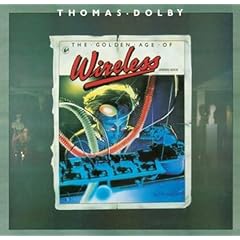
Then, out of the blue, Thomas Dolby reissues a nice, deluxe, definitive version of his debut album, "The Golden Age of Wireless".

I originally owned this album on cassette. I listened to it extensively in the early 80s. At TIP one year, I met a girl who also had a copy. We were listening to hers and the second track ("Radio Silence") came on. Her cassette had a very different version of the song than mine did. Hers had guitars and live drums. Mine was synthesizers and sequencers. Weird.

Over the next few years, I found out that "Wireless" had not only been released in these 2 different versions, with different mixes of "Radio Silence", but had originally been issued without its biggest hit ("She Blinded Me With Science") and its best track ("One Of Our Submarines"), and had included Thomas Dolby's first 2 songs "Leipzig" and "Urges".

On top of that, there were some versions that used the "short" version of "She Blinded Me With Science" and some that used the more famous 12" mix (famous for its stuttering "Sci-i-i-ence" edits, one of the sounds that defined 80s dance music).

There were different versions of the album cover. There may have even been different versions of "Airwaves" - some with the bridge, some without.

Which one of these was the "right" album? The definitive album?

There are other instances of this sort of confusion around the "original" work, whether it is George Lucas "improving" the early Star Wars movies or Star Trek's original series getting "digitally remastered" (i.e. completely re-done) special effects.


Todd Rundgren once said that after he'd heard a mix 3 times it became the final, definitive mix for him. He's concisely describing what I'm getting at here: The first experience one has with a particular work is usually the defining experience. Regardless of what tweaks the artist may insist are needed (or not), the viewer seldom notices the differences - unless the works are put up against each other in a "spot the differences"-type of comparison.

The original experience is the one that contains all the power. Any later modifications cannot substantially affect this original experience. It is said "You only get one chance to make a first impression" - that's especially true in art.

I think this also means there's little value in revisiting previous works with an eye towards "improving" them. While I find it interesting to hear the Boomtown Rats' other takes on their material, it doesn't change my feelings about the album as a whole, or the missing tracks, or the new/replacement tracks. The best thing about the Thomas Dolby remaster isn't the changing of the running order to what is "correct", or the deletion or replacement of "Science", "Submarines", "Leipzig", and "Urges". It's the addition of long-lost singles and b-sides, some of which I've never heard before.

Whether Duchamp created the readymades from scratch or not is irrelevant at this point - everyone experienced the idea of the readymades with the (possibly incorrect) understanding they were common household objects. That idea gave them power, even if it's not true, or wrong, and even if the artist could take it back or change it later.

The initial impact of the idea matters most. Aim carefully. You only get one shot.

Wednesday, July 15, 2009

Creativity and The Gear You Need

Gear. No matter what your work or hobbies are, there's probably gear that goes along with it. Good gear, bad gear, cheap gear, expensive gear, stuff in fashion, stuff out of fashion.

I spend time on sites like MatrixSynth and Vintage Synth Explorer, as well as more focused blogs like Chris Randall's Analog Industries and Stretta, reading about instruments and recording devices.

The merits of particular synthesizers and other music gear are regular topics of conversation. Like any community there are The Topics - the stuff that gets brought up over and over and never resolved, such as "digital versus analog", "plug-ins versus hardware", "what should I buy?" and "which piece of gear is better/best?"

The last topic in particular is one I find somewhat silly. In most cases, the differences between the gear being discussed aren't meaningful in any sense. If reasonable people (or even Internet forum readers) disagree, it cannot be clear-cut, can it?

Even if one could prove an identifiable difference, that's not the same as demonstrating that one particular approach/sound/item is "better" than the other for the purposes of doing something creative.

There are people who will say "oh, well, if you're doing house music, you have to have a 909", as a way of saying a certain piece of gear is standard, if not "required" for a given genre. I think using exactly the same gear that other people in your chosen genre is a good way to sound just like everybody else - and that's a bad thing!

For creative endeavors, my experience and belief is the outcome - the creative work - matters far more than what went into it. For modern recorded music, the end listener really has no idea what created what they're hearing - and most of them don't care what created it, either.

In the case of the "vocal chain" - the microphone, pre-amp, and other gear that gets the voice to the recording media - people will argue or discuss the gear to death. But few people acknowledge the importance of getting a good take from a good vocalist, on a good piece of music. The performer matters more than the gear, always.

In general, I think worrying about the "sound quality" of synths or other gear is a distraction or a way of avoiding deeper issues. Does the gear one uses really make that much of a difference, once it is in a mix, reproduced over varying playback systems?

Let's assume it does for a moment. Do you really want to be making music so dependent on one instrument or timbre? If you do, the choice is clear - you get a Moog or whatever exxxpen$ive gear you need and that's the end of it.

Is the problem with your music really that the "Moog Voyager sounds too clean, and you need a vintage MiniMoog" or that "your synth has DCOs and VCOs are better"? Or that you need a new $2,000 microphone preamp?

Or is the problem with your music about 6 inches in front of the mic or the synth?

I think people focus on gear discussions because it's much less scary than talking about the deficiencies of the most important gear in the chain - you.

It's easy to say "my music is bad because I don't have [insert expensive gear here]". In my case, I know I'm going to get more bang for the buck by improving me. Writing better music, performing it better, making the most of the gear I have.

Pick an instrument you already have and do something with it. Quit worrying about the sounds it doesn't make, the alleged deficiencies, or what it doesn't do. Use the sound it does make - and make something.

I think there's a dearth of writing and discussion about creativity out there - I'm contemplating a project (blog, book, or something) focusing on creativity, process, and outcome rather than gear.

Wednesday, June 17, 2009

Newspapers, Record Stores, and The Tonga Room

I. The Death of The Newspaper
No-one could save Woolworths, because the niche it had catered for no longer existed. Similarly, commentators are up in arms about the plight of regional newspapers. But when was the last time you read one? Sometimes, the depressing conclusion is the only accurate one.
There's a simple reason the newspaper business is in trouble: No one is buying newspapers anymore. You aren't. I'm not. As a result, newspapers are in a death spiral of sorts - they start raising their prices, which makes even fewer readers want to buy them.

Offering free Internet versions of newspapers is one competitor. Another is pure Internet news aggregation and free sites. But there's more to this story, and less.

Television and Internet news provide news instantly, on demand, as it happens. Print newspapers have an inherent lag which results in "aged news", as The Daily Show cruelly notes:
The Daily Show With Jon StewartMon - Thurs 11p / 10c
End Times
thedailyshow.com
Daily Show
Full Episodes
Political HumorJason Jones in Iran

Cruel, yes. But also true.

The real problem with the newspaper business is that newspapers did not really understand their business. Most newspapers derive a majority of their revenue from advertising - classified (user-generated ads, if you will) and paid advertising. In effect, they are advertising delivery vehicles that happen to have news.

Once Craigslist, Ebay, Freecycle, HotJobs, Monster, and other special-purpose sites ate the newspapers primary classified businesses, the newspapers started dying. Newspapers hadn't realized their "true business" was conveying classified ads. If their business really was news, papers would be competing and succeeding on the quality and quantity of news. Newspapers that delivered true, accurate, and well-written news - or at least popular news - should thrive.

While people can argue about the quality of news reporting over the last few years, it is difficult to argue that a general decline in quality is responsible for people abandoning the newspapers for Internet and TV news, as those providers offer even lower quality, less reliable news. That's not why revenues and readership are declining.

Ultimately, the regional (and some national) newspapers are dying because people just don't care about them. No readers, no purchases, no paper. They're less relevant to readers because there's better ways to get news (TV, Internet) since the key value for news to users is timeliness. They're less relevant to advertisers because their targets are elsewhere now.

II. The Death of Record Stores
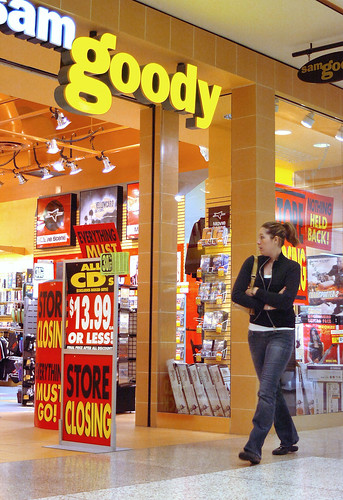
The National Association of Record Merchants (NARM) is now sponsoring "National Record Store Day", as sure a sign of the irrelevance and death of the record store as there is. It was April 18, 2009 this year.

They're dying for the same reasons newspapers are dying. You're not going there. I'm not going there. NARM is reduced to creating a "holiday" for it. Their website is a study in looking back to the good old days, with its 90s fontography. (And kids, that funny-looking "o" is supposed to represent a 45-RPM single. They haven't really been sold in most record stores for nearly 20 years. They're kind of like shellac 78s. Oh never mind.)

Why aren't we going there anymore? There are parallels with the newspaper situation. Record stores died because they didn't really understand the value in their business. Record stores assumed there was something "magical" about the record store experience. But really, record stores only existed because people needed a place to go buy music. The only reason we went was to get music. Once we could get it someplace else, we stopped going.

Once Wal-Mart, Best Buy, and Target started carrying the Top 100, 40, 20, or 10 (and deeply discounting those records as loss-leaders to generate store traffic), record stores began to lose their walk-in traffic from casual fans who wanted one record and would pick up a few others as impulse buys.

Once Amazon and other web sites were able to offer catalog depth far exceeding even the largest megastore, record stores began to lose their hard-core traffic. I remember trying to buy a Kraftwerk record in the late 90s at the Virgin Megastore on Sunset Boulevard. I was told by one of these employees they could "special order" it for me. It would cost extra and take 2-3 weeks to arrive. I went home, ordered it on Amazon, and it showed up days later, on my doorstep. No extra charge. Unsurprisingly, that Virgin Megastore is now shuttered.

Of course, not all record stores are gone, just like not all newspapers are gone. But the ones that remain are the same kind of small, niche-oriented, small sub-culture shops that exist for just about any hobby, such as comic-book collecting.

And just like some people enjoy the ritual or habit of reading the Sunday paper (partially because it's old fashion, tradition, etc.) there are people who enjoy browsing and wandering through record stores.

But record stores, like newspapers, are irrelevant to the majority. They're no longer a cultural force, and like newspapers, ultimately only have themselves to blame. More forward-thinking stores would have understood they were in the music distribution business. There was no reason for Amazon to be able to destroy Tower et. al. except those stores couldn't see beyond their expensive real estate. They thought their stores, employees, and fancy displays were the "magic" driving their business. All the customers saw that as the packaging around what they really wanted - the music. Once they could get the music in more convenient ways, they didn't need the record store or even the compact disc anymore.

III. The Death of The Tonga Room
In February of 2009, reports began to crop up that The Tonga Room was going to be closed and likely demolished as part of a condominium conversion of the building it inhabits.

Once the word was out, a few people started a belated attempt to save it.

But it's too late. By the time you have to organize an effort to save something - National Record Store Day, for example - it's already too late.

Predictably, the San Francisco whiners come out in droves in comment sections on websites, bemoaning the loss of another San Francisco icon, griping about dot-com carpetbaggers, and saying that San Francisco just isn't what it used to be. They should go look in the mirror.

The Tonga Room is closing, just like newspapers and record stores, because you don't go there. I don't go there. They don't go there. If it had fantastic business, it wouldn't be closing. End of story.

You can get the historical society to label it a landmark. And then just like all the other landmarks, you can museumize it. Charge a fee. Trap it in amber. Restore it to its former glory, just like it was decades ago. Tourists will stop by and check it out on the way to Coit Tower.

But you won't go there. You'll sit at home, reading the news on your iPhone while you listen to the music you downloaded from the Internet. You'll sip your coffee, look out the window, and wish you lived in a simpler, better, time - one filled with newspapers and record stores and charming Tiki bars.

You might even wonder why people don't appreciate what they have until it's gone.

Monday, June 08, 2009

Overcast Books and PDF now available

"Overcast" books are now available from Blurb in both ImageWrap hardcover and softcover. You can see Blurb's preview and order your copy today.

RPM 2009 (v1.0)
By Anu

Created to accompany the 2009 album "Overcast", the book features more than two dozen images by noted photographer James Carrière and book design by award-winning designer Iran Narges.

"Overcast" includes the complete lyrics for the songs as well as essays and blog entries by Anu describing the creative process, completed entirely during February 2009.

The "Overcast" book is the ideal companion to the album and a beautiful art piece on its own. It is clearly the best of the books I've done so far.

There is also a free PDF available with the album or by itself.

Saturday, June 06, 2009

Remembering Gary Finneran

Gary Finneran with Tuscaurora in 1999Gary Louis Finneran took his own life on May 10, 2009. He was 45 years old.

Gary was best-known as the singer for the Ex-Idols, a notorious Los Angeles/Orange County punk band active in the early 1990s.

I knew him as the leader of Tuscaurora, a loud-as-hell rock band in the late 90s. Gary wrote terrific, creative songs, sang with a unique voice, and played left-handed guitar. As musicians go, Gary was the real deal.

Gary was a charismatic, talented, and troubled person. He had an infectious smile and true punk's sense of fun, adventure, and a lust for chaos. Whenever I think of him, I think of him smiling or laughing.

I didn't know him well, but well enough. Well enough to know how much he loved and idolized Kurt Cobain. How passionate he was about music. And drinking.

I spent time with his kids. I saw his bands play. I saw Gary set fire to a stage. My then-girlfriend Anne was the bass player for Tuscaurora and the keyboard player for the M-80s, an 80s cover band who were one of the inspirations for Sid Luscious and The Pants.

I reconnected with Gary briefly a few years ago. At that time, Gary was taking composition classes, "learning to write real music", he said. It sounded like he had moved beyond his self-destructive tendencies and achieved a new kind of happiness and stability in his life.

I am sure Gary's better friends are feeling the same way I am about him these days: Surprised. Not surprised. Disappointed. Angry. Sad. Mystified. Grateful that we had him as long as we did.

In addition to his music and devastated friends, he leaves behind 3 children.

The world is the poorer for his decision to quit its stage.

Tuscaurora - Like We Were Never
Tuscaurora - Beautiful Nothing
Tuscaurora - Get You High
The Ex-Idols - Kind of a Sid and Nancy Song
The Ex-Idols have made their music available for free download.


"He took it all too far, but boy could he play guitar"
- David Bowie, Ziggy Stardust


Gary Exits

Thursday, May 21, 2009

Dave Allen likes my Faded Flowers Shriekback Cover

Mr. Dave Allen from Gang of Four and Shriekback has taken a liking to a cover I recorded of Shriekback's sublime "Faded Flowers". You can read what he had to say here.

You can get the track from Alonetone.

I am incredibly flattered. Both Gang of Four and Shriekback were big influences on my musical development.

Dave has been a big advocate of the next music business model and is continuing to promote new stuff over at his Pampelmoose site.

This track was one of the last and best things I recorded at The Hive in L.A. before shutting it down and moving to San Francisco. Ace producer Ken Kessie helped with the mix and the always fantastic Anne Kadrovich contributed backing vocals.

The original track has long been a favorite of mine and is a standout on Shriekback's wonderful "Oil and Gold" album.

Monday, May 11, 2009

Duke Nukem, Axl Rose, and the Urgency of Art

Duke Nukem Forever is never coming out. 3D Realms, the studio developing the game, closed their doors last week. Their previous title in the series, Duke Nukem 3D, was extremely popular, sold a ton, and helped build today's game industry. It made 3D Realms a ton of money.

What happened to Duke Nukem Forever? They took too long.

3D Realms announced the game back in April of 1997. 12 years. That is a long time to work on any artistic or commercial endeavor in any industry. It's absolutely ridiculous in the PC game space, given how fast hardware and operating systems evolve. To put it in perspective, the OS people were using at that time was Windows 95!

I do not have the inside scoop on what happened with 3D Realms, but I can speculate. I am sure the company was under tremendous pressure to ship another smash hit, and back in the late 90s choice of game engine was a big deal. id Software's Quake engine was one, the Unreal engine was the other. Duke Nukem started development using the Quake engine and switched in 1998 to the Unreal engine.

This is never a good sign in the game world. Another game which also made a similar engine switch was epic failure Daikatana. Changing engines requires a ton of work with no immediate benefits to the product, only potential benefits. It eats time, money, and team energy. It is also indicative of an error in product planning. Any project considering swapping out such a major component needs to consider whether or not it should simply be canceled.

Axl Rose and the rest of Guns N'Roses were some of the biggest rock stars in the world in the early 1990s. Their popular debut album "Appetite For Destruction" gave them wealth and credibility, so much so that the band couldn't figure out what to do next, releasing a fumbling EP, a sloppy double album of mostly older, pre-Appetite songs, and the inevitable covers album. That covers record, "The Spaghetti Incident", came out in 1993. (Parenthetically, I was working at The Record Plant in 1992 while Guns N'Roses were there recording this album).

The band was, again, likely under pressure to deliver a smash follow-up album of original material. They started writing and recording in 1994, but apparently could not make things work. The band effectively broke up in 1996 and was reconstituted as an Axl Rose solo project while retaining the name. In 1998, the then-current line-up began recording.

"Chinese Democracy" was released 10 years later. The band wasn't recording every day for the entire 10 years - indeed, it's hard to know exactly when the tracks were recorded. It is also doubtful that Mr. Rose and the band were hunched over pianos, quill in hand, writing for that entire time.

Band line-up changes are tough to handle, but in "singer-with-a-band"-type situations, there's usually one principal songwriter (or at least editor) anyhow, and in this case, it was Mr. Rose. From what information is available, it is clear he was the principal songwriter for the album's material.

One could also posit that Mr. Rose was being meticulous in his recording, aiming for some sort of sonic perfection, detailing, or "vibe". But I don't believe that is the case either.

For Duke Nukem, some game footage, animations, and renders have leaked out from the ruins of 3D Realms. While there isn't even a game to evaluate, from what I can observe, it was simply a new Duke Nukem game - same characters and enemies from previous games tarted up in the latest high resolution drag. It's a first-person shooter. Even when these titles really push the boundaries (see Half-Life, Thief, Deus Ex), they're still basically the same game. There is little to suggest that Duke Nukem Forever was going to be a revolutionary title worthy of over a decade of development.

You can go listen to "Chinese Democracy" for yourself. It's a competent hard rock album. People complement it by saying "well, it sounds like a Guns N'Roses album, and certainly sounds like it could have come out after 'Appetite For Destruction.'" Except that the band spent 10 years making it...and that's all they have to show for it? (It is also rumored the album cost $13 million dollars to create, making it the most expensive recording project in history).

I believe both of these projects suffered from similar issues. It wasn't simply the pressure of delivering a bigger follow-up to a commercially successful product. I believe it was a loss of urgency.

There is a belief in the commercial art and entertainment businesses that people can create "hits" reliably and repeatably. And while this may appear to be true for some individuals and companies, I believe that success is out of the control of the creators.

It is possible to execute your ideas well and deliver a financially solid product. But one never knows when a work is going to resonate with the public, catch the Zeitgeist, be in the right place at the right time - whatever - and truly blow up.

As a result, you're better off shipping frequently and as fast as possible.

Creativity is a fire. It cannot be kept up raging for a long period of time on the same project. The longer something stews, the less exciting it becomes. Finish the idea as fast as possible and move on. There is no "perfect". There is only "better".

The more you create, the better you get at all aspects of creating including "finishing" in every sense of the word, and releasing/shipping.

Duke Nukem Forever didn't have to switch engines. They could have released the originally-planned game. If it was "fun", it would have sold. If not, the problem was with the original design, not the engine. Some people still play the (now retro) Duke Nukem 3D. It's "fun", even if the engine is primitive.

Even with the engine switch, presumably the studio had a vision and plan for finishing the game. Somewhere in there they lost it, and started freaking out about what to add, change, drop. One must stay focused.

For Guns N'Roses, the picture is less clear. Mr. Rose is famously volatile and demanding. Still, it is hard to hear the album released in 2008 without thinking this album could have been released in 1999.

If I were Mr. Rose, I would have gone to the public and said "I'm never releasing Chinese Democracy, but I have a new album I recorded last week." Make it fast, ship it fast. Especially for popular music, there's really little benefit in working for years. Many hit songs were written in less than an hour.

Things are a little different for "classical" works - some of that can be due to the sheer number of parts, some of it can be due to compositional rigor - but there are also examples of pet projects composers worked on for many, many years (Bartok's "Bluebeard's Castle", for example) which didn't live up to the hype.

Ultimately one needs to remember that with each passing hour, day, and year expectations rise as well, and probably exponentially rather than linearly.

All of the above is why I do the RPM Challenge every year. Perhaps Mr. Rose should give it a try in 2010. As for 3D Realms, I wish them the best of luck.

Sunday, March 15, 2009

MP3 Sound Quality Survey

The latest article making the rounds concerns an 8-year study undertaken by Stanford Professor and composer Jonathan Berger.

His study seems to indicate that young people increasingly prefer the sound of music encoded in MP3 format (at 128 kbps) to more accurate reproduction methods, including original CD audio, higher bit rates, and a proprietary wavelet audio compression technology.

There are 2 things to note here:
1. This should not be surprising
2. Who cares?

This should not be surprising. The last 10 years have seen a dramatic rise in the usage of MP3, and I'm sure most of the people in the survey have spent more time listening to MP3s than anything else. The artifacts introduced by the compression are what music sounds like to them.

It's no different from audiophiles who go on and on about how vinyl "sounds better". Vinyl does not sound better. It sounds different. It is a terrible reproduction format, and requires very expensive gear to reproduce at quality (which makes it elitist and bad). Every time you play vinyl records, you degrade them a little, eventually destroying them. Vinyl records warp. They skip and pop. They have lots of surface noise and all kinds of phase problems in the high end. They can't handle much energy in low frequencies, especially when it's not dead center. I could go on.

Tape has problems. Mechanical reproduction (like phonographs) has problems, too. Every generation from the 20th century on has grown up with its own reproduction technology, and they all think their particular technology is the best sounding thing ever, and don't want to give it up for whatever the "crappy" (but actually better) new thing is.

Put another way, old people like black and white movies. Today's digerati fetishize low-resolution 8-bit graphics and the "chiptunes" of early video games. Instruments abandoned for their limitations and quirky sounds are embraced by later generations of musicians for precisely those reasons. People are still going on about how film looks better than video, regardless of resolution.

If most of what you've heard is "sizzly" MP3s, stuff that isn't a sizzly MP3 isn't going to sound right. And it's also worth noting that over the last decade, musicians have started mixing with MP3s in mind.

More importantly...

Who cares? Seriously. For the time being, the record business isn't going to stop releasing music on compact disc. In fact, they'll keep re-mastering the records you already own and selling them to you again (and depending on who you believe and what you listen to, those remasters are way better or way worse). Sales of "audiophile vinyl" are continuing to cook along.

Hell, the music business is still trying to launch higher-definition audio formats. It's too late - new physical formats are never going to go mass-market again. But the golden ears will always be able to spend more money and buy better sounding product (theoretically) to play on their expensive stereos.

So young people like music that literally sounds bad (by objective accuracy standards). I'm not sure how that's any different from young people liking music that sounds bad by subjective artistic or critical standards. Duke Ellington famously said "if it sounds good, it is good". (He didn't actually say that, but that's how it's misquoted). Anyhow, his point was "the only thing that matters is whether you like it". So if people like MP3s, great. They also like light beer, McDonalds, and reality television. I'm not going to hold it against them.

If you want an example of the cynicism and short-sightedness of the music business, look at how they have treated the (allegedly) inferior-sounding digital downloads. They charged the same price. For a low-quality digital file. With no artwork. With DRM.

A few years ago, people were happy to buy 128 kbps Windows Media Audio files for the same price as the full-blown CD. And the industry was happy to take their money. No discount for low sound quality. No free upgrades to higher quality. No premium for higher sound quality.

The industry could have said "yes, sound quality matters, so we're going to sell these low fidelity tracks at a discount, as a teaser or means of price discrimination. You can always buy better quality if you want." That didn't happen.

Instead, the biz sent a message: Sound quality doesn't matter. It's the same message they sent when they sold compact cassettes and 8-tracks. Only recently have they started to also say that it does matter, by offering various more expensive options. Can't have it both ways, guys.

Anyhow, eventually the digital music business will be delivering better-than-CD-quality files - 24-bit 96 kHz WAV files or the equivalent. At that point, we can go back to complaining that no good records have been made since [insert whenever you were a teenager] instead of just saying "kids don't appreciate good sound."