Tuesday, December 21, 2010

The Shape of The Universe, 15 years ago

About 15 years ago I released an ambient/electronic album called "The Shape of The Universe". Despite being both all instrumental and using some electro-acoustic compositional techniques, this album is one of the more popular things I've done.

It spent nearly 6 months on top of the MP3.com experimental charts and sold enough to convince me there was a future for independent musicians willing to work hard.

I created this record during a one-month stint while I was unemployed. My "job" was working at my rehearsal studio in L.A.

Having broken up my band after several years of trying to write "hits", playing guitar, singing, and trying to please other people, I decided to make some music just for me, without regard for what others might think.

I can still remember working on this project and playing some rough mixes for my musician friends. I was surprised at how well-received it was, and that early feedback from people like Justina Klimkevich, John Kaizen, and my brother convinced me to finish.


You can download the whole thing, or just listen here:


The equipment I had at the time was laughably small and limited compared to what I enjoy today. The entire gear list for this recording project is as follows:
  • Roland Jupiter-6 synthesizer (thanks, Chris Fudurich!)
  • Casio CZ-101 synthesizer
  • Akai S1000 sampler (with 8 MB of memory)
  • Yamaha SPX-90 digital effects unit
  • Roland GP-8 effects unit
  • Tascam 488 Portastudio (8 track cassette machine)
...and that's it. Well, I played a china cymbal on one track. And recorded the clothes dryer.

This album was released on cassette. My brother designed an intriguing cover. And we decided to include a random selection of 3 of 24 "trading cards" as well. This was the beginning of my interest in alternative packaging for music.

After all this time, I'm thinking that I should probably do another Captain Kirk album. I'm also contemplating a book that will reproduce the trading cards.

Friday, December 17, 2010

Who's Wrecking Your Product?

It really does only take one person to wreck a product.

Sometimes they wreck it before it's even started. Sometimes they wreck it while it's being made. Sometimes they wreck it after it's done.

Creating a product requires many things:
  • Clear vision - this includes what need it should address, why it's being built, for whom, and what the timeline should be. 
  • Realistic goals - this includes the budget and resourcing as well as the expected feature set and benefits to the company bottom line
  • Carefully balanced trade-offs between all of the competing elements
  • Discipline 
Ultimately, the product manager is responsible for all of the above. But in many companies, product managers lack the authority to enforce those items. In others, the key decisions are either made or overridden by senior management.
    Steve Jobs Wrecked Your Product
    "Boom! I just wrecked your product!"
    Why blame The Steve? He's legendarily, heavily, deeply involved in nearly all aspects of product creation for Apple. Mr. Jobs really does make many, many decisions. And he's frequently, annoyingly "right", in the sense that Apple's products have sold extremely well since his return from exile.

    Many books have been written about Steve Jobs and Apple, dissecting them both and seeking the reason for their success. I think in both cases it comes down to one thing: discipline.

    Apple seems to realize the value of restraint. Less is more, especially in software. They initially launch with a sometimes laughably small number of features...but they all work, and work well. They slowly add high-quality features over time. This approach is very similar to the "kaizen" process that Toyota uses. Developing with discipline beats rushing out a feature-complete-but-buggy 1.0 and then trying to patch it.

    Steve Jobs is very good at helping decide what to leave out. He understands that good products are narratives (like, say, Pixar films). They have a central theme which must be supported and reinforced.

    Steve Jobs has caused 2 major problems for everyone else, though. And both are the result of being blinded by surface and style rather than focusing on deeper critical thinking.

    Steve Jobs Wrecked Your Boss
    Nearly every high-level executive I can think of secretly (or not-so-secretly) wants to be Steve Jobs. They admire his panache, life story, fashion sense, reputation, and of course, massive success.

    Unfortunately for many, one of their takeaways from Steve Jobs is "I need to micromanage my product team". They insist on arbitrary product reviews with no clear next steps. They make changes without a strategic or tactical understanding, of the project goals. They don't stay informed about the product constantly, and rather like the Eye of Sauron, swing in to focus on it erratically and painfully.

    They change the central theme of the product. They move goalposts. They revoke previous decisions.

    Steve Jobs sets clear goals at the outset: Who's the ultimate decision maker? (he is, and he stays involved) What's the theme of the product? What are the resources? And so on.

    If your supervisors emulate the wrong aspects of Steve Jobs, you may be wrecked before you even start. Getting around bad management is a challenge for the best product managers. Sometimes it is clear that bad management will wreck your product. It's almost always better to ship even a flawed product than to bail out, however.

    So, misunderstanding leadership lessons from Steve Jobs. What else? How about misunderstanding design!

    The Cargo Cult of Steve (or, Your Company is Not Apple)
    I have a kitchen timer that looks like an original iPod. Because it was designed and made when iPods were popular. It is a terrible, terrible product. And it is obvious the company that made it wanted it to look like an iPod to cash in.

    While it is superficially similar to an iPod, in practice, it is the antithesis of what made the iPod popular. It takes a relatively simple product (a countdown timer) and turns it into something incredibly annoying and difficult to use.

    Reasons why it's terrible? Off the top of my head:
    • Button layout arbitrary and inappropriate for purpose
    • Buttons are too stiff
    • Inscrutable UI
    • Lack of attention to detail
    It feels awful to use.

    I don't know the folks who created this thing, but I can imagine the meetings where they decided (or perhaps the boss demanded) to adopt the visual language of the iPod without understanding the product thinking that led to that visual language. It is cargo cult thinking.

    Products get wrecked when companies decide to emulate other products' surface appearance without understanding the thinking that created that appearance in the first place.

    This is different from following "industry standards", "best practices", or even "trends". Those all have their place when they are conscious decisions made with intent.

    Copying Apple is a conscious decision, and the intent is clear - emulate success. But Apple's success (and design) come about because the company makes conscious decisions with intent.

    Another frequently cited example is the use of 3D buttons and glossy effects. Apple doesn't make buttons glossy and 3D just because they "look cool". They do it to make the buttons stand out clearly from the rest of the flat, matte interface. Many other OS widgets (Android, Windows 7 for example) use glossy and 3D effects in a gratuitous fashion, and frequently the shiny highlight makes text less legible.

    Design elements should never be gratuitous. If you're doing something for no other reason than "it looks cool", reconsider. That said, "looking cool" can add value provided you're not interfering with the rest of your product functionality.

    Your boss might misunderstand Steve Jobs. Don't allow yourself or your team to misunderstand Apple and design in general. Make conscious decisions with intent. Think about what you are trying to accomplish and what would work best.

    Let form follow function. Or at least make sure the form is informed by function, or you know what your trade-offs are. Innovative and exciting designs frequently spring from re-focusing on what the customer is actually trying to do, rather than merely sprucing up existing design conventions.

    Don't let Steve Jobs wreck your product! Be disciplined. Make your own choices with intent.

    Up next: Your Team!

    Tuesday, December 07, 2010

    SuperWaitress Remix for The Folk Opera by Annie Bacon

    The talented Annie Bacon (late of Sweet Crude Bill and the Lighthouse Nautical Society) recently released her epic project "The Folk Opera". As part of this, she asked me to do a remix of the song"Superwaitress".

    It's now available. Go check it out!

    Thursday, December 02, 2010

    Why Products Really Suck, Part 1

    Image from: http://bit.ly/dM9CtS
    I recently read this rather glib and uninformative article about "Why Products Suck". It got me thinking. I've made and shipped a number of products. Some won awards. Some were terrible.

    I've definitely learned a few things, and I can definitely provide more insight than the above-mentioned article's key points, which were:
    1. It only takes one person to make your product suck.
    2. Nobody ever got fired for sucking.
    3. It’s easier to suck more than suck less.
    4. There are more ways to suck than to not suck.
    5. Customers demand sucky products.
    So I'll be doing a series of articles on making good products. First, let's look at what's wrong with this article.


    First point. The author claims "It only takes one person to make your product suck." There are a number of interesting and correct directions he could take this statement. But his actual point is that you need consensus among your "team" that your primary goal should be "not sucking".

    It is true that it only takes one person to wreck a product. There's a New Yorker cartoon I used to have taped to my wall that showed a guy at a desk writing on something his subordinate handed him, saying "I just need to make one change that will ruin all the work you've done."

    Frequently, that person is not who you expect them to be, and they will be the subject of a future article.

    I will also discuss the pros and cons of team consensus.

    Second point. "Nobody ever got fired for sucking". This is sadly true, however the point as presented in the article is rather weak. The author is basically saying "you should fire bad people" without clarifying the differences between:
    • appropriate and inappropriate risk
    • initiative and running wild
    • genuine accidents/mistakes and negligence
    Good teams and good managers not only get enough rope, they sometimes get tangled up in it. Not every risk pays out, and some risks lose big. That's why they're risky. Start-ups take bigger risks than established companies, and new products take bigger risks than established ones. They have to in order to survive.

    I'll discuss risk and failure as well.

    Third point. "It's easier to suck more than suck less". His somewhat dippy phrasing covers the best point he makes in the article: Serve the right customer. Don't be so desperate for customers you build features that aren't core. You'll attract the wrong customers and then be beholden to them with even greater costs for getting back on track.

    There will be a nice long article about discipline in product design.

    Fourth point. "There are more ways to suck than not to suck." His point here is "you need to be careful with your choices and define your product clearly before you start development". This is true, but many of the examples he cites are not relevant to that point at all. There are tactical mistakes one can make. Choosing the wrong user interface widget isn't one. Good UI designers don't really have choices with too many questions if the product is well defined - in those cases, the best (or at least better) tactical choices are fairly obvious.

    Strategic choices are much more difficult and much more important, and frequently glossed over in both theory and practice. I firmly believe that making great products is not particularly difficult if the environment is good and the team is competent. I'll cover that as well.

    Fifth point. "Customers demand sucky products." This is a rather provocative statement, given the "customer is always right" attitude that dominates. The author's main point is , but he follows it up with a poor, or at least insufficiently specific suggestion:
    Trust your instincts and the tiny set of users who use you, and resist advice from the billions of people who don’t.
    Good product designers do have instincts, but those instincts are informed by experience, best practices, and lots of research.

    Your current users are frequently the last people you want to be talking to about how to evolve your product. In the early stages of a product, your users are likely to be unrepresentative of the larger user demographic, unavailable in sufficient numbers to float your whole business model on, and highly demanding.

    For more mature products, your users are again likely to be unrepresentative of the next tranche of users you hope to attract, and will be used to how your product works. They are likely to demand minor iterations or evolutions of features.

    The short answer is "talk to people who are like the users you want to have", and the long answer will be coming in a new post soon.

    Up Next: Who's wrecking your product? (Answer: Steve Jobs. Seriously).

    Tuesday, September 14, 2010

    Apple Shuffles On

    As predicted, Apple has abandoned their button-free iPod Shuffle design for a return to the "ring button" layout of the very popular clip-style iPod Shuffle. It's a much better design.
    The "new" iPod Shuffle, now in many colors. (image courtesy of Apple)

    Overall, it's still expensive and feature-poor compared to the Sansa Clip, which offers more memory, an FM tuner, and a screen, but it is a much nicer-feeling product. The Sansa Clip still feels like a toy, as do most non-Apple MP3 players.

    Ultimately, the new iPod Shuffle is a mature, solid product and in many ways, a perfect design.

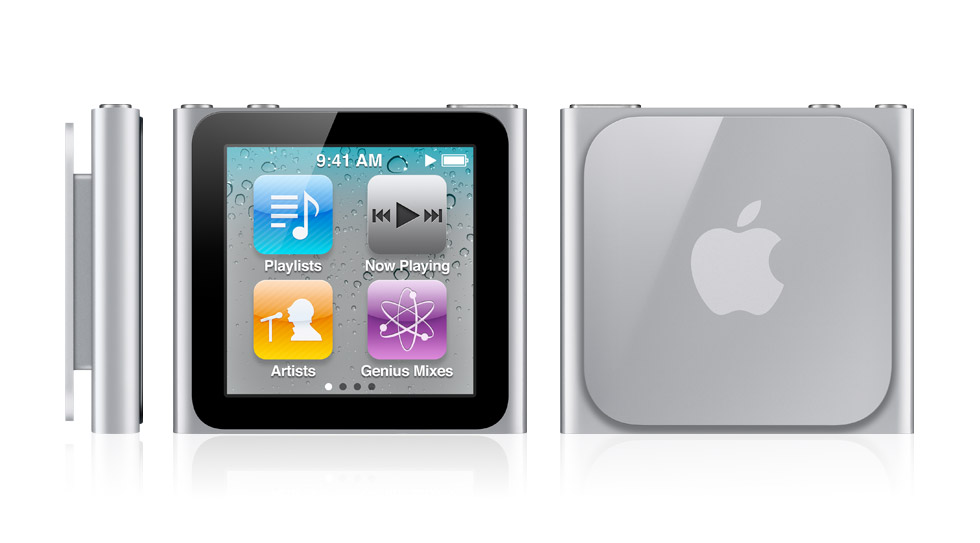
    The new Nano is a bit more baffling. I suspect it's just marking time and covering a price point for Apple, as they can't yet get iPod Touches down to a cheap enough price point, can't charge more for the Shuffle, and are unwilling to leave a gap in their iPod price line for a competitor to fill.

    The current iteration of the iPod Nano (image courtesy of Apple)
    As a technological achievement I suppose the new Nano is rather nice, but as a product, it's sorta goofy.

    I did somewhat anticipate their grafting a touchscreen onto such a tiny form factor, but after the addition of the camera to the Nano in the previous round of revisions, I expected it to be the Shuffle that got it, rather than the Nano.

    That would have allowed Apple to claim they were still moving forward on the Shuffle design rather than "retreating" to a previous one, and would have left the door open for more advancements in Nano land (the lack of a camera on the new one is arguably a big step backwards).

    In its current design, the Nano is intended to be clipped onto one's clothing, like the Shuffle. But in practice, this means both the display and the controls for the unit are facing out and away from the user, so the user has to look down at their clothes and/or pull the Nano towards themselves to see and manipulate it. Because the screen is the control surface, and because it is so tiny, it is very difficult to hold the Nano while controlling it, and while you are pushing its surface, much of the screen is obscured.

    Contrast that with the "candy bar" Nano design. Its hardware controls and orientation allowed for "blind" operation - you could skip tracks or pause in your pocket, without looking at the screen. Because it was "candy bar" style and size, it afforded gripping in the hand while looking at the screen, without obstructing the screen.

    The new Nanos also don't allow users to install or run apps (and I'm glad about that, because otherwise there would be yet another Apple mobile configuration to design for), but their visual interface design picks up many of the cues of Apple's higher-end products, including fancy animations, a pivoting display, "multi-touch", and more. Much of this is simply gratuitous, but goes a long way to justifying the pricing in consumer's minds.

    I find the much-vaunted "multi-touch" control silly and inferior to the simple elegance of the click wheel for something like the Nano. The Nano itself is hard to pin down - it's too fancy and fiddly for the gym, the Shuffle being far superior for that.

    Eventually, I expect Apple to merge these two products - their design framing suggests they're headed this way. Again, I suspect it's a matter of covering price points while they wait for component and design costs to come down, for all aspects of the product line. When they do, I hope they manage to keep more of the ring button design and less of the touchscreen, but past behavior sadly indicates otherwise.

    In the meantime, Apple manages to monetize its quirky design choices and its decisions to emphasize the "feel" of products as much as their actual features.

    Most people, even hardcore audiophiles, are better off using a smartphone or iPod Touch-type device as a music player. If you need a portable for the gym, I'd still recommend the Sansa Clip over the Shuffle unless you're an all-Mac person. The Sansa Clip may feel like a toy, but that minimizes the pain you feel when you drop it or lose it.

    Saturday, August 07, 2010

    Vonnegut on being an artist

    Today's wisdom:
    "So many people think that practicing an art is a good way to make a living. Practicing an art, no matter how well or how badly, is a way to make your soul grow...it's not a trade." - Kurt Vonnegut
    Starts at about 6:22. Read him, he's great.

    Monday, July 26, 2010

    This is a little old but worth posting.

    In a bit of 20th Century music news, FirstSounds.org has figured out a way to play back some of the world's earliest sound recordings. The folks over at Tonehammer, a purveyor of fine samples, made free reproductions available:
    Invented in the 1850s by French inventor Édouard-Léon Scott de Martinville, these "Phonautograms" actually predate Thomas Edisons earliest recordings by nearly two decades.

    They were made by projecting sound into a cylindrical horn attached to a stylus, which in transferred the vibration into lines over the surface of soot-blackened rolls of paper. These captures were purely optical.
    No device existed which could translate the recorded acoustic information back into sound, until the First Sounds organization acquired the artifacts, with the help of the French Academy of Sciences. They worked with scientists at Lawrence Berkeley National Laboratory and other experts to devise a method of scanning and deciphering the images.
    I used some Tonehammer products on my soon-to-be-released "Reflection" album. Good stuff!

    Thursday, July 22, 2010

    The Rational Rationing of Health Care

    Everything in the physical world is rationed.

    There's a finite amount of stuff. As an economist, I always believed a big part of the value of economics was studying ways to divide up a finite amount of stuff against greater demand.

    This is called "rationing."

    Health care is no exception to this. There aren't enough doctors, drugs, or MRI machines to go around for everyone to get as much as they want all the time. (This could be changed if society wanted to do so, but that is a different discussion).

    So American society "rations" it. Currently, that rationing system says that if you're wealthy, you can have all the care you choose to buy. If you're extremely poor, you might be able to get an emergency room to help you...and if you can't cover the bill, the American taxpayer will pay. If you're in the middle, should anything remotely serious happen, you're going to get clobbered unless your employer offers insurance, and even then, you're only covered up to what they choose to provide.

    As for the "choice" everyone supposedly has or wants, all those American workers covered by employer-provided plans generally don't get much choice, unless you think "this or nothing" is a good choice; or if a choice between "affordable but crappy insurance" and "you could theoretically have what you want, but in practice you can't pay for it" is a choice.

    "Rationing" is a term thrown around to scare people. It conjures up images of nasty military food and extreme scarcity in times of war. See past the term and get to what's really being discussed - do you think the finite amount of healthcare should be simply up for sale to the highest bidder, and that cash should be the only criterion for distribution?

    As a society, I think we can have an intellectually honest debate about whether health care is a basic human right or not (we can choose to be like some Third World countries and literally let people die in the streets) but that's a lot more personal, intense, and harder to fight against than "rationing".

    Another point brought up frequently is that centralized systems like those of the UK or Canada, "the basics" (broken arms, shots, infections) are well-covered, but things like cancer or fanicer treatments are harder to get treatment for.

    Guess what? You're probably only ever going to need "the basics". It's akin to owning terrible day-to-day clothes but 3 bitchen tuxedos. I think it's better to focus on covering most of what you need most of the time.

    Framers of the debate are playing on people's emotions, their fears of serious diseases, and their lack of statistical understanding. It's shameful.

    Most of the people in the debate are reacting from fear and emotion, rather than thinking about what they really need and what's best for everyone. That's nothing new, but I remain disappointed in the general public's ability to see past such blatant attempts at distortion and manipulation.

    Over the last few years, I've interacted more closely with the insurance-medical complex. It's hardly been ideal, but I've managed to get the care I've needed, as have most people I know.

    Insurance works on a simple principle: spread risk out over a large population. I suppose viewed through Tea-colored glasses it sounds "Socialist".

    Perhaps this ultimately mirrors the larger sub rosa conversation going on in American society today: Would you prefer that you personally had the small opportunity to be very, very rich while everyone else is poor, or would you prefer we tried to lift everyone's quality of life a little bit?

    The recent lottery hype provides all the answer one needs, sadly.

    Tuesday, July 20, 2010

    MOG for Mobile Phones


    Today MOG launched its Android and iPhone mobile apps. So far, the reviews have been good.

    This is the culmination of months of hard work by the MOG team...and also yours truly. I learned a lot and believe this app is superior in several ways to some of my previous efforts. Not perfect yet, but we'll be working on these for a while.

    These apps are also the latest step in the music services my friends and I have been envisioning for over a decade: (nearly) Every song in the world is available for your immediate listening. Or download to the phone for playback later without a connection. High quality sound, too.

    I've been working in digital media for so long I sometimes forget to appreciate the paradise we've created.

    So if you have an iPhone or Android phone, go get MOG! 3 day free trial, or just go ahead and sign up.

    Friday, July 16, 2010

    41

    Good coffee. A quick omelette. "The Pearl" on the stereo. Through windows jeweled with dew and fog I see the sun pulling itself up. 41 today.

    Last year, with the aid of family and friends, I had a wonderful, massive birthday party. I was working at Rhapsody. Had just written a song called "Oh Shit, I'm 40!" (which I will record and post here soon). Much has happened since then.

    Not long after that party, my employment situation changed rather dramatically. I managed to start a digital media consulting business before ending up with a new job that has made me far happier than my previous gig. And this in an economy where many talented people cannot find anything. And my phone is still ringing!

    I had a computer near-death experience, but managed to retrieve all my data (thank you, TechCollective!) and still finish one of the better records I've made: "Reflection", which will be fully released as soon as Sound and Fury finish putting the book together.

    In May, I saw my cousin Claire get married. It was great to see how much she'd grown and changed over the years. Hard to believe this was the same woman who had appeared as a nearly-silent teenager who wouldn't look you in the eye. It was also nice to see the extended family and friends together, many of whom I hadn't seen in decades.

    On Monday, July 12 my great-aunt Caroline "Linie" Lushbough died. She was 88 years old. She was more of a grandmother to me than her sister ever chose to be. A wonderful, remarkable woman. True pioneer stock, she had a pilot's license and flew planes, cooked delicious food, and always, always had a great attitude about everything. I was fortunate enough to see her this past May.

    On Wednesday, July 14, I saw Neil Young in concert. Neil is 64 years old and still performing a wide range of music. Inspiring. Perhaps I don't have to "retire" from live performance just yet (I'm currently playing in 2 bands, one of which has a show tomorrow).

    Life isn't perfect, but that's OK. I'm working on things that need attention and getting better at ignoring the rest. I am incredibly fortunate, and grateful for the life I have. Sometimes it feels like every day merits a celebration. Today is as good a day as any.

    Thank you all for checking in here, and for being a part of my life!

    Saturday, May 29, 2010

    Who's To Blame For The BP Disaster?

    I've posted about oil before, and I've posted a few times about other energy sources. I feel compelled to write about the BP disaster.

    It's been over a month since the Deepwater Horizon sank, and oil has been pouring into the Gulf of Mexico non-stop ever since. BP's latest effort ("Top Kill") has failed. It is gradually dawning on people that BP may not be able to stop the leak any time soon.

    This will be the largest environmental catastrophe in American history. As much as I hate to prognosticate, I expect in a few weeks the phrase "America's Chernobyl" will make its way into the public dialog. And it should. But in the long term, this is worse than Chernobyl.

    While Chernobyl was awful, affecting hundreds of thousands of people, it was dealt with quickly. Chernobyl resulted in a relatively small number of direct human deaths, and a minimal effect on the surrounding ecosystem. Now, 24 years later, nearly all of the area is habitable. Wildlife appears to be making a strong comeback, even with the radiation and inevitable genetic damage.

    If BP were to stop the oil right now, the world is still facing the real possibility of the extinction of much of the sea life in the area, and the potential collapse of the ecosystem in the Gulf in both short and long term. Each day that passes increases those odds.

    There is a very real possibility the well simply cannot be stopped with the technology we have today. With Chernobyl, relatively simple techniques (dropping tons of concrete) worked, and worked quickly.

    There are about 3800 offshore drilling platforms in the Gulf of Mexico alone. The real surprise for the BP spill isn't that it happened - the real surprises are that it took this long to happen, and that the industry remains able to drill in places where there was not a robust plan for dealing with a "black swan" event or total failure scenario.

    If you had been told "hey, there's a chance that offshore drilling will absolutely obliterate the Gulf of Mexico", would it still have been OK?

    But that's not the real issue here. Right now, everyone is focused on one question: Who's to blame? So far, I've heard:
    • BP
    • Halliburton
    • Transocean
    • Big oil
    • The Bush Administration featuring Dick Cheney
    • The Obama Administration
    But this is all distraction and misdirection. Here's who's really at fault:

    Us. Me. You.

    We ignored the wake-up call of the '70s oil shocks and spent the last 40 years pretending everything was OK
    We continued to drive gas-guzzling cars after the oil shocks of the '70s, culminating in the plague of SUVs and The Hummer
    We care more about how fast our car gets to 60 than how far it goes on a gallon of gas
    We care more about cupholders and DVD players in our cars than emissions
    We wanted a ridiculously big, heavy car because it made us feel safer, despite it actually being less safe for everyone else, and occasionally, us.
    We knew we'd run out of oil, paper, and fresh water in our lifetimes and we decided somebody else would figure it out
    We complain about windmills blocking our view
    We fight nuclear power
    We are OK with lopping the tops off of mountains and wrecking our landscape for coal, as long as it doesn't happen in our town
    We complain every time the price of gas goes up a nickel, despite the fact that we only spend $2400 per year on gas, and the real cost of gas has fallen steadily over the last few years
    We couldn't be bothered to bring bags to the grocery store and embraced the plastic grocery bag with open arms
    We bought bottled water, buying industry panic and hype while both paying for tap water and infrastructure and not caring about groundwater quality
    We leave the lights on
    We expect everything to be wrapped and packed in plastic

    Most damningly, we feel entitled to a particular way of life: A rich one, where we get to say what changes and what doesn't, when and how. That's delusional. Our way of life is always changing, like it or not.

    We should all take a good look in the mirror. Make some changes right now. Find out what you can do. And prepare for a less pleasant way of life in the future.

    Monday, May 17, 2010

    Music and Business: What The Internet Really Means

    5. What The Internet Really Means (for musicians)
    Back to the original graphic that started this series of posts: It seems to show the best way for musicians to make a living is for them to sell CDs directly to fans.

    Really? All this upheaval, all these changes in the music business, and the best thing people can come up with is a strategy from 1990 (but as Suck.com would say..."on the WEB!")?

    Does anyone really believe that artists should concentrate on selling CDs directly to fans?

    First, the CD is dead. At the recent NARM conference, what's left of the irrelevant music retailing business was agitating for $10 CD prices. So the folks selling CDs want the price to go down, which means less money for music.

    Guys, you're about 10 years too late. Tower is gone. Wal-Mart is very close to yanking all music from its stores. Best Buy is practically there already. The biggest music retailer now is iTunes, and in case you haven't heard, they don't sell CDs.

    Second, there's the part about you selling direct to your fans. Once you've unwisely transmuted several grand into heavy plastic physical goods, you now have to distribute them. Hey, how many record stores (run by the aforementioned irrelevant music retailers) are in your town and immediate area?

    Oh, but you're going to sell direct to your fans, right? OK. How many shows are you playing this month? For how many people? How many CDs are you going to move? How many did you move at your last gig? What about your friends' bands? How are they doing?

    Mmm. You have a website? Well, you're on the right track. Now at least people can buy your CD whenever they want, instead of whenever you happen to be near them with a CD in hand. But you're either going to have to cut in CDBaby or you're going to handle fulfillment and credit card charges yourself. And your fans will have to wait several days for your CD to arrive. It sure would be better if you could just provide downloads.

    And if you are providing downloads, why not have someone else host them, so they're always available? Why not make sure they're sold in the #1 store? That would be (right now) iTunes.

    So you're back to selling downloads on the Internet. Because that's how you make your music available in the most convenient way to the most people. And from there, it becomes obvious that you should have your music available on Pandora, Rhapsody, MOG, and all the other services.

    Why? Because if people can't hear your music where they want and in the way they want, they won't hear your music at all. And you'll get zero dollars for it.

    In this respect, the internet is great for musicians, because it allows you to cheaply distribute your music worldwide, 24/7. Yeah, you make less money per transaction. Big deal. The other folks in the chain are providing value. Personally, I'd rather have 100 people pay me $1 for my album than 1 person pay me $200 for it. But then, I'm not a "professional" these days.

    In terms of live music, I'd note that when I fronted a cover band, I made thousands of dollars and could have easily made a living earning close to $100k per year...if I had wanted to sing "Hungry Like The Wolf" in shiny silver pants night after night. It was fun and it paid the bills, but it was not deeply satisfying. It was also a hard life full time - lots of alcohol, travel, bad food, and other work hazards.

    The internet made it easy for the cover band to get booked - people could check out videos, MP3s, and photos. We didn't have to doll up expensive physical promo packs. And people from all over the world could check out the band, resulting in a wider range of bookings.

    Making my own music, while extremely satisfying, has barely made me enough money to buy a dinner or break even on the CDs. Factor in the gear, time, etc. and I'm way in the red. But I get to make exactly the music I want, on the terms I want, when I want. And with the internet, everyone can hear it.

    Ultimately demand for music is lower than musicians would like. Despite the supposedly bleak financial picture for the business, there are more people making music and releasing albums than ever before.

    That freedom, that creativity, that power - it's a good thing, right?

    If you're interested in making music, the internet is great for you...and great for everyone else. You'll have to try hard to be heard over everyone else's music. But all in all, the internet giveth more than it taketh away.

    If you're interested in selling music, the internet is essential for you...but you're in a terrible, highly competitive business. My advice to you: lower your expectations and/or get into a new line of work.

    Regardless of whether you're making or selling music, as a vocation it is a tough one. Despite the difficultly, people have been and will continue to be professional musicians. The internet is now a key part of any job requiring networking and communication.

    The original graphic and article show just one axis or dimension: what you have to do to get a certain amount of money. It positions all of these actions as equivalents, which is a substantial elision. Selling CDs directly to fans is extremely difficult. That's why you get to keep more money: it's hard to make the market and convince someone to buy your CD. It's much easier to convince them to play your song a few times on a music service like MOG or Rhapsody.

    The internet and music technologies have provided a new universe of tools for creators and listening experiences for users. It's the world we live in now. Rather than continuing to decry how little money musicians get (something that is probably as old as music itself), I think we should focus on how to get more people listening to all of us.

    All 5 Parts Now Available:
    1. The Problem Nobody's Talking About
    2. Too Much Music?
    3. Now It's Everywhere
    4. The Audience Isn't Listening
    5. What The Internet Really Means

    Monday, May 03, 2010

    Music and Business: The Audience Isn't Listening

    4. The Audience Isn't Listening
    Many record business executives point to the original, illegal Napster as the beginning of the end. And they blame Napster for mortally wounding the music business. But Napster didn't host files. It just allowed people to share them. It was the listeners and fans who did all the "illegal downloading".

    Since the glory days of the music business (let's call it the late 1980s) the world has changed. The business stopped selling singles (or charged much more than they ever had) and focused on albums. The major labels changed how they develop artists (they stopped). They changed their definition of a "hit" or successful record. They focused on selling 2 million albums in a single year over selling many millions over a career.

    Music fans grew up. The entertainment dollars they and their kids have can go to music...but they can also go to Internet subscriptions, World of Warcraft, XBox, mobile phones and data plans, iPhone apps, computers, Netflix, DVDs, and fancy coffee. The music business has responded...largely by offering the same product, but "remastered", with a "bonus disc" at a higher price. In other words, "please just go buy it again".

    Digital music services came along. The traditional industry responded with piracy concerns and has only reluctantly allowed legitimate services to operate, dragging their feet the entire time.

    Simultaneously, the record industry has sent mixed signals about piracy. Some users who upload are sued, some aren't. Some services which offer content illegally are shut down, others are allowed to "convert" to legitimate services...provided the labels get cash, an ownership stake, and a seat on the board. Some blogs which host mp3s get taken down, some don't. It's no wonder listeners are confused.

    Music is a niche product. And there's a glut of it.

    Listeners are overwhelmed. There's so much music out there, the value for listeners is practically zero, and their ability to wade through it all to find things they're interested in is minimal. In the aggregate, "music" has value to them. But any one piece of it? Probably not so much.

    The average annual per capita expenditure on music in the USA is about $35 and it is declining. Most people don't care about music. They just don't. They won't pay. They'll steal or listen for free, and they don't much care to what. There's a ton of free music easily accessible.

    Music has a strange, asymmetrical value proposition. One listener might be willing to pay $5 to hear the new Radiohead song. Another user might have to BE paid $5 to listen to it. Perception of value of individual music changes over time.

    The labels have been somewhat unfairly charged with assuming that all music fans were pirates. But perhaps on one level, the labels were right: Maybe the problem is the audience. It's not listening and it's not buying.

    It's not hard to see why - "so much music, so little time"...and so little worth paying for. That's not to say there isn't great music out there. There is. But it's extremely difficult for any individual user to find. CDs and physical media are dying out, but the digital services have largely been handicapped with Draconian restrictions and aren't able to produce an experience so much more compelling that everyone has to get on board.

    To put it in context, the business community gets extremely excited about things like Facebook and Twitter. Regardless of what one may think of these services, they've been allowed to create something compelling enough to attract millions of users within a few years of launching...while the latest and greatest music services struggle.

    Sure, it's possible that everyone (except Apple) really has gotten it all wrong. But there are millions of people downloading illegally and listening to music without paying for it. That's not Apple's fault. Or Rhapsody's.

    Maybe it's the record business' fault. But it is also the fault of the people doing the illegal downloading.

    Up Next: Part 5 - What The Internet Really Means/Conclusion
    1. The Problem Nobody's Talking About
    2. Too Much Music?
    3. Now It's Everywhere
    4. The Audience Isn't Listening
    5. What The Internet Really Means